By David Villiers
Chair Airworthiness
Various incidents have recently caused GAus Safety, Operations and Airworthiness to investigate the issue of canopies coming open in flight. Unfortunately, these incidents have not been limited to Australia. GAus is aware of at least two recent incidents in New Zealand. As a result, SOAR Reports from as far back as September 2011, when the current SOAR system was established, have been reviewed.
From September 2011 until today, a total of 59 incidents of canopies coming open in flight have occurred. The causes are shown in the box opposite.
The causes listed are not surprising. We know that interrupted checks are a major contributor to a range of safety incidents, and failure to properly lock a canopy is perhaps also related to interrupted checks. The other causes are less common, but all preventable.
Of particular interest is that 18 of these 59 incidents (30%) involved Astir types, both single-seaters and two-seaters. Most of these types share a common canopy locking mechanism that appears at first sight to be simple, robust, easily maintained and easily seen by both the pilot and maintainer. However, the evidence indicates that it is not foolproof.
An Astir canopy latch can fail to lock for a variety of reasons. Operator error is an obvious and easily assumed cause, but it is not the only factor affecting Astir canopy locks, and operator error is often the result of design, maintenance and operational factors. It is all too easy to assume that the pilot neglected to ensure that the canopy was locked. Deeper investigation can show that factors such as poor maintenance, wear and tear, heat effects, lack of familiarity with the system, rushed checks or other factors play a part in the incident.
Modern accident and incident investigations look beyond the surface of any incident; we’re all familiar with the ‘Swiss cheese’ model of Professor James Reason. Hence, we should not be relying solely on the CHAOTIC check to ensure a locked canopy.
An additional check by the wing runner has been adopted by some clubs, but this approach risks the problem that, if more than one person is involved in a process, then no-one is ultimately responsible for the outcome. Of course, it is the pilot’s responsibility to ensure that the canopy is closed and locked before takeoff, and no additional checks by others relieves them of that responsibility.
However, using the Swiss cheese model, there are other things that can be done to insert additional defences, and some of these are largely related to airworthiness and maintenance.
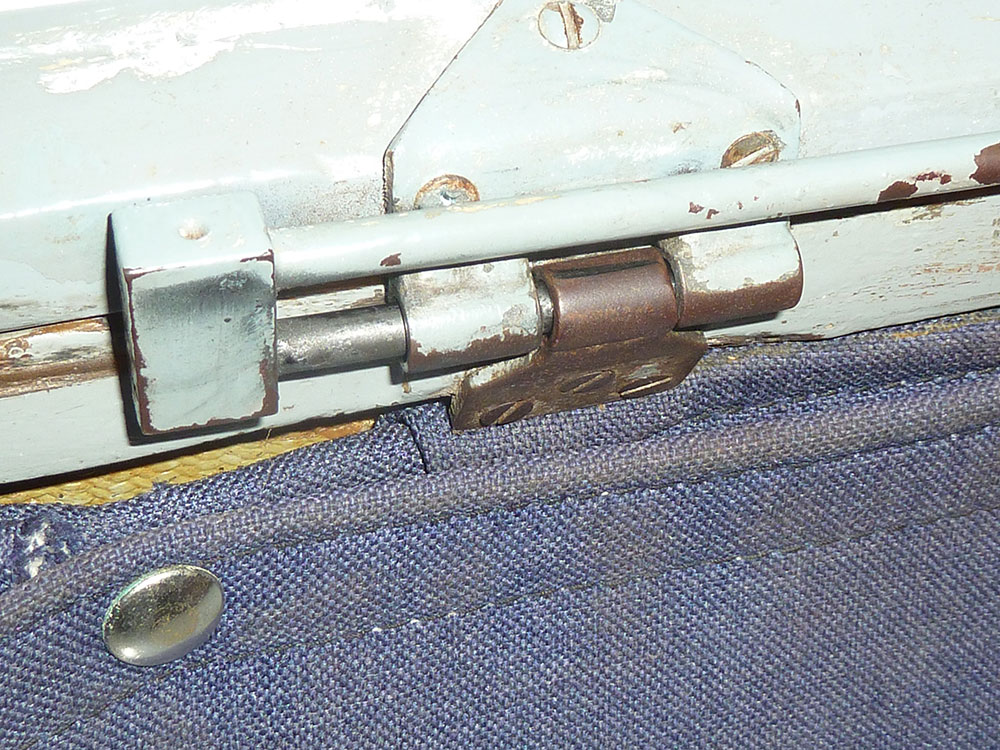
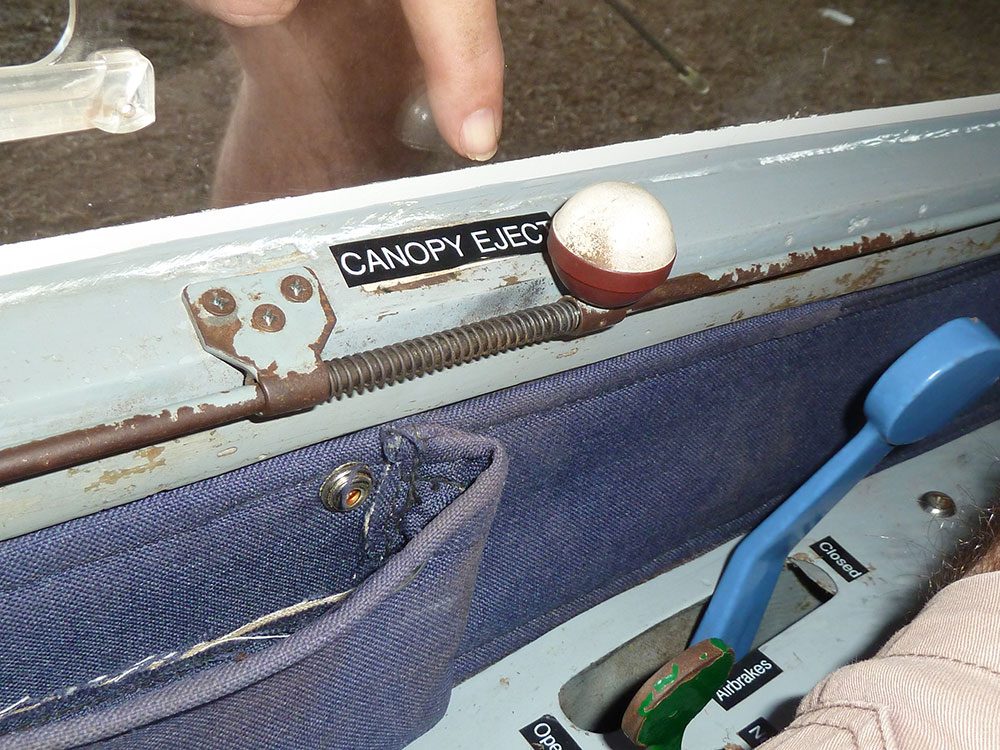
The Astir canopy latch consists of a rod that pushes several pins through sleeves located on the fuselage lip and the canopy frame. The rod is pushed into the locked position by a small spring and has a red knob for the pilot’s actuation. Maintenance-wise, particularly for well-used aircraft, a few problems may inhibit the proper functioning of the latch. These include -
Misalignment of the three sleeves through which the pins are pushed,
- A bent or deformed push rod,
- Corrosion, paint and other contaminants,
- Poor lubrication (too little, too much or the wrong lubricant
- Heat effects
All of these issues can, and should, be detected and addressed through regular inspection and maintenance. A rigorous Daily Inspection is a good defence in this regard.
A further defence that could be adopted is a painted mark on the canopy rail or fuselage lip that lines up with a similar mark on the push rod – take care to prevent paint from getting onto the pins and sleeves. Checking the alignment of the marks while closing the canopy would help overcome a poorly latched canopy, but would not protect against a canopy that hasn’t been closed. The Astir canopy latch can be locked with the canopy still open, and the aligned marks would provide no protection in this scenario.
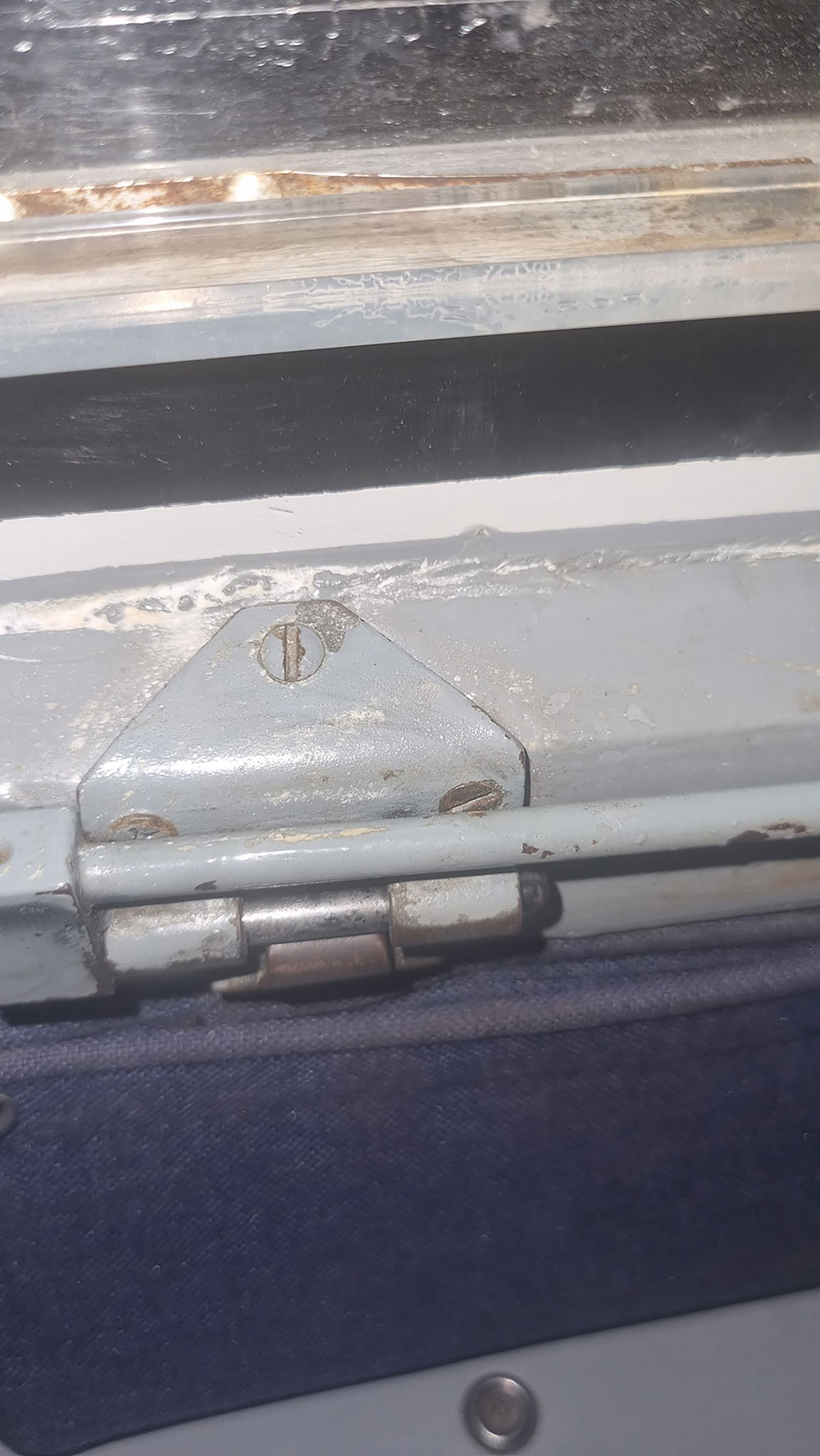
Figure 3, latch appears locked, but is NOT pushed through the sleeve on the fuselage frame.
Figure 3 shows an Astir canopy latch that appears locked – ie, the pin is fully seated in the two sleeves on the canopy frame – but is NOT pushed through the sleeve on the fuselage frame. Obviously, in this position the canopy is not properly seated and can open without the locking knob being moved. While this is more an operational than an airworthiness issue, ensuring that the canopy sits properly without applying additional force is a defence that can be assured to work through maintenance.
Finally, canopy locking system checks are required at both Daily Inspection and at the Annual Inspection (Form 2). However, when conducting an Annual Inspection, the canopy is usually the first item removed from the aircraft to be taken away and put in a safe place. It is then not looked at again until it is reinstalled at the end of the inspection.
It is at this point that the canopy locking mechanism should be cleaned, lubricated and checked for easy and correct operation. The operation of the canopy locks can only be properly tested when the canopy is installed on the aircraft. Also, at each DI the canopy is opened and closed multiple times, but there should also be a specific check that the canopy locking system is working properly, is free moving and easily operated.
Another check that temperature variations do not interfere with smooth operation of the canopy locks is also worthwhile. What may work in a shady hangar may not work as well having been soaked for an hour at 45° C on the flight line.
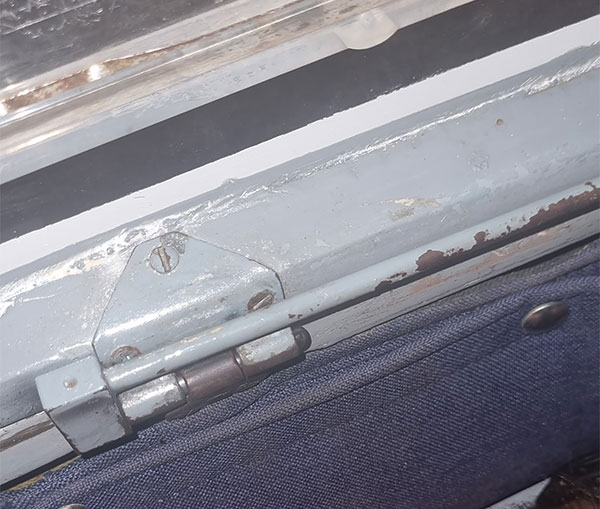
Properly locked.
Glider Rigging and Flight Control Connections
This is a perennial issue to which we need to pay constant attention. The potential for a serious incident or accident is always present when we rig a glider and re-connect its controls. Again, the issue is not limited to Australia. Recently the European Aviation Safety Agency (EASA) re-issued its Safety Information Bulletin SIB2019-07R1 because of further incidents in Europe.
GAus has published this updated SIB as AN178 Issue 2, and it is well worth reading. Everyone who holds a Daily Inspection authorisation would profit from the experience encapsulated in this document.
L’Hotellier Connectors
The EASA SIB addresses a range of control connectors, but the one which seems to appear most often in SOAR reports is the L’Hotellier connector. Apart from these connectors often being in places where they are hard to see and reach, they are required to have an extra locking mechanism, which can be very difficult to see, reach and check.
The importance of these extra locking mechanisms is highlighted in a YouTube video (see link below), showing a L’Hotellier connector in an airbrake circuit. Note how the spring-loaded tab (or wedge) reacts as the airbrakes are locked and unlocked. Fortunately, this connector has a Wedekind sleeve fitted, serving as the only thing stopping the L’Hotellier from disconnecting as the load is varied.
As well as the routine maintenance requirements for L’Hotellier connectors (see MOSP3 Section 13.4), the extra locking systems installed on L’Hotellier fittings are an important defence against disconnection and need to be checked at each DI.
The video, which was recorded in Japan, can be found at tinyurl.com/5h66cs9e