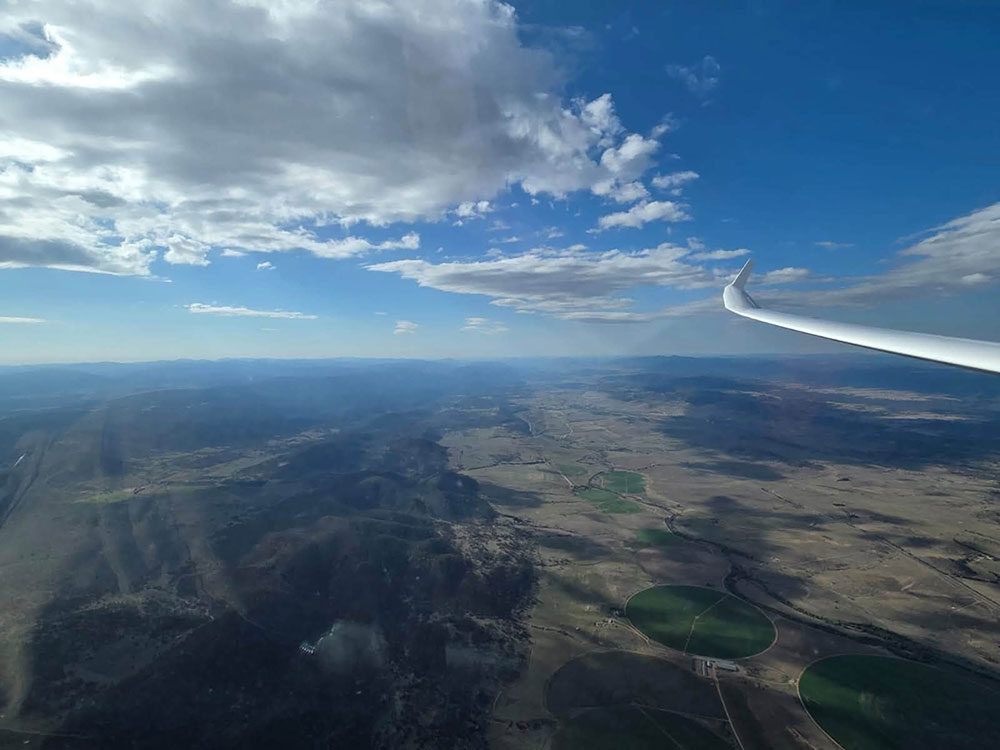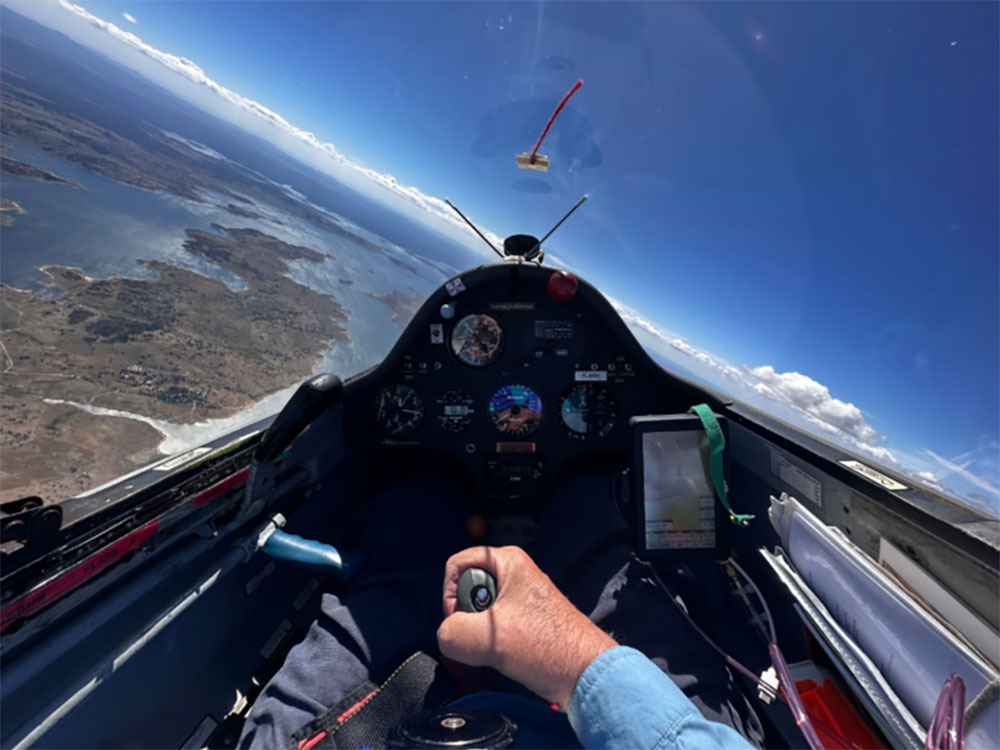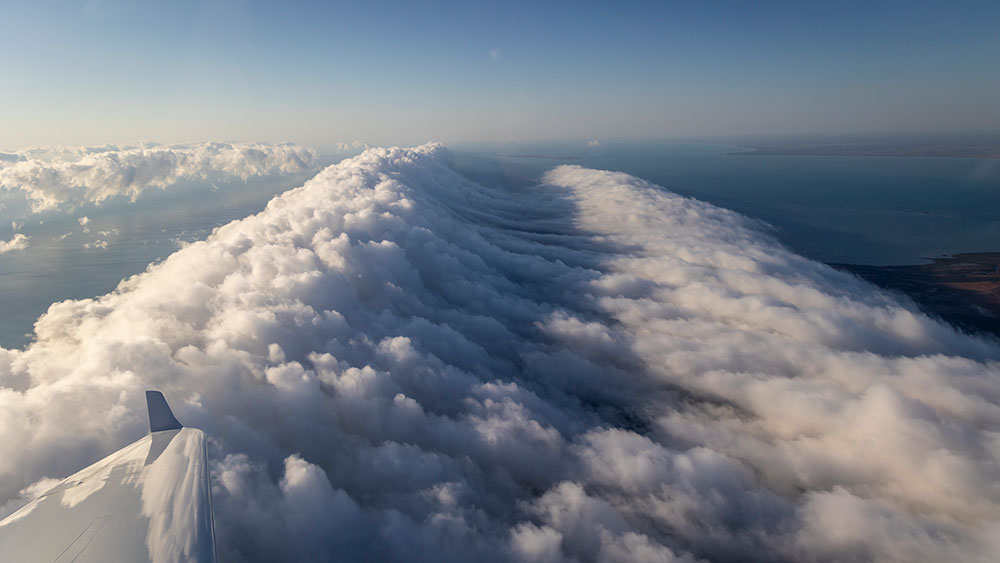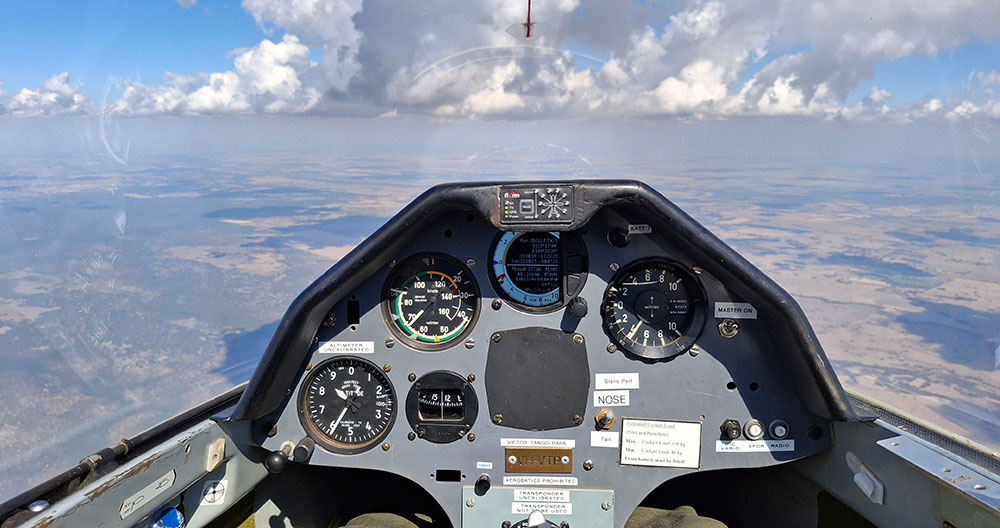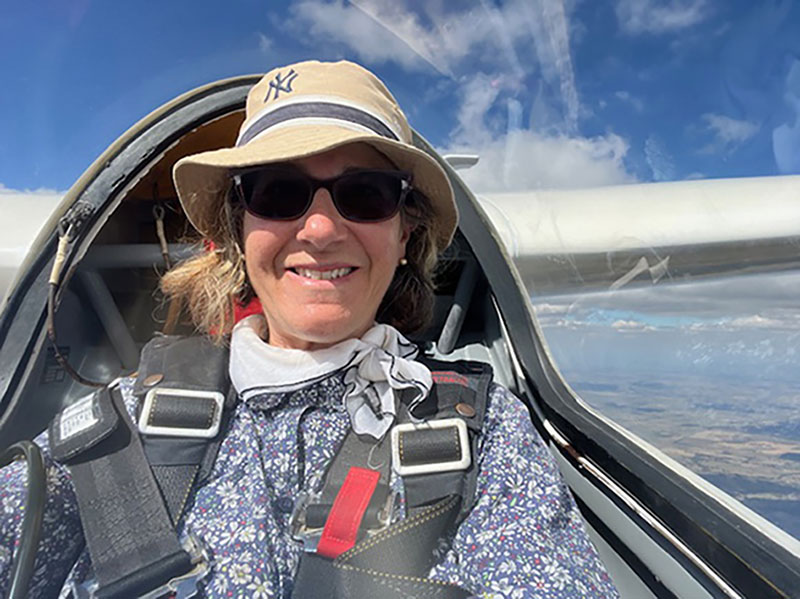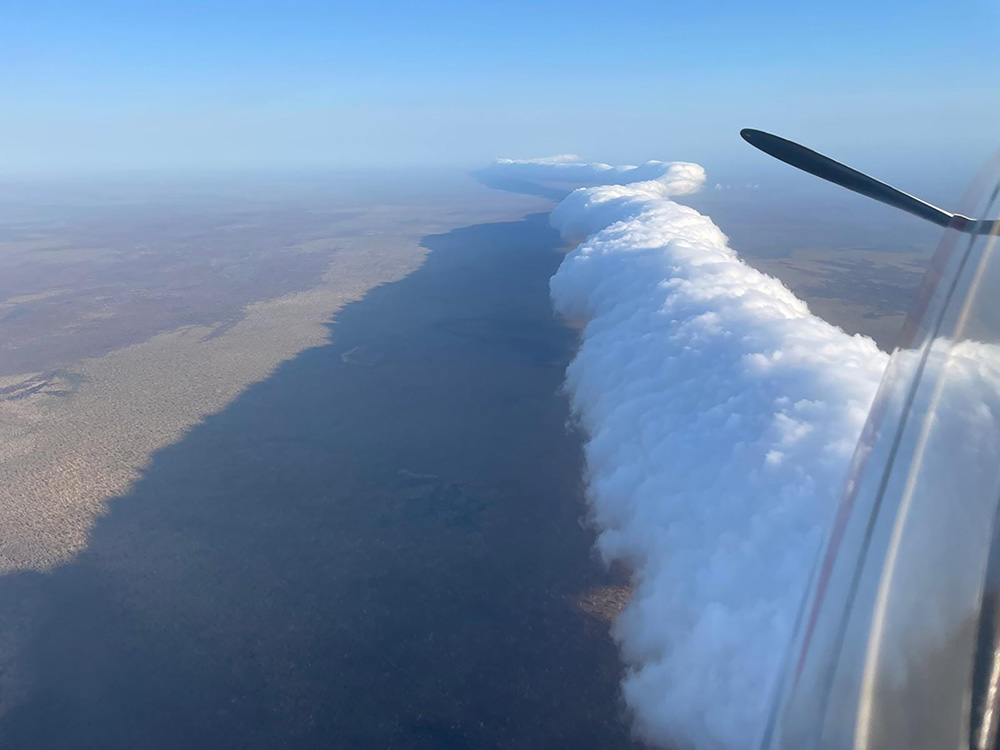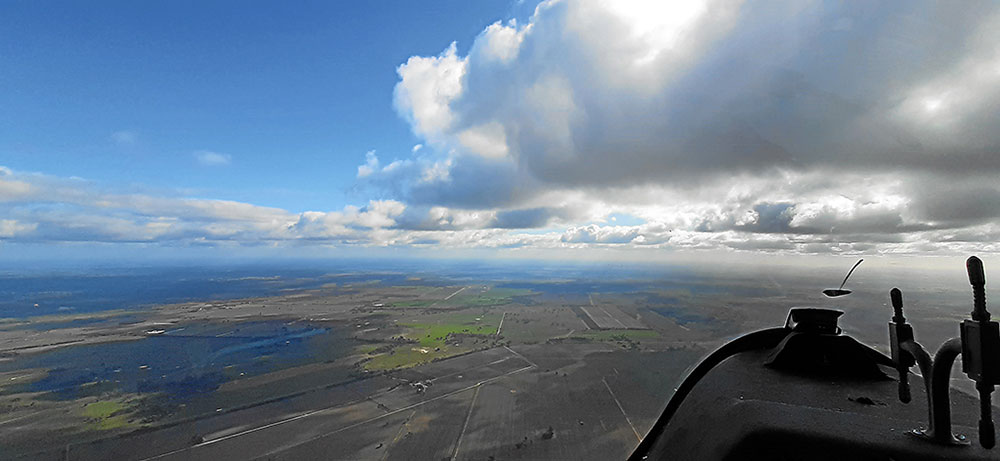
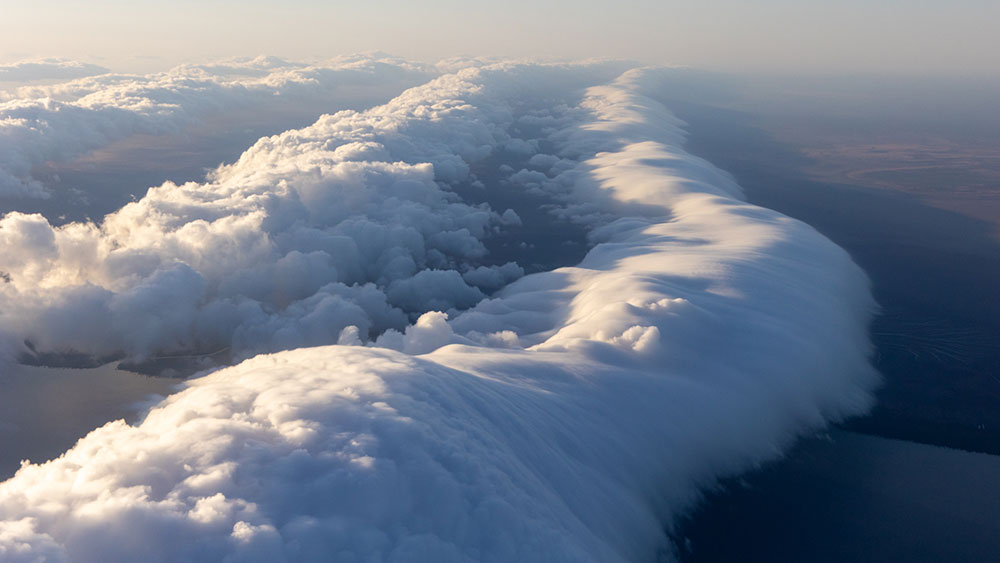
ABOVE: One of the better formed clouds that we had this year.
By Michael Zupanc
This year’s expedition to the Gulf Country was defined by three distinct chapters – redevelopment of the Burketown airport, the awe-inspiring presence of the Morning Glory clouds themselves and, most remarkably, Geoff Pratt’s staggering milestone of 30 consecutive years chasing them.
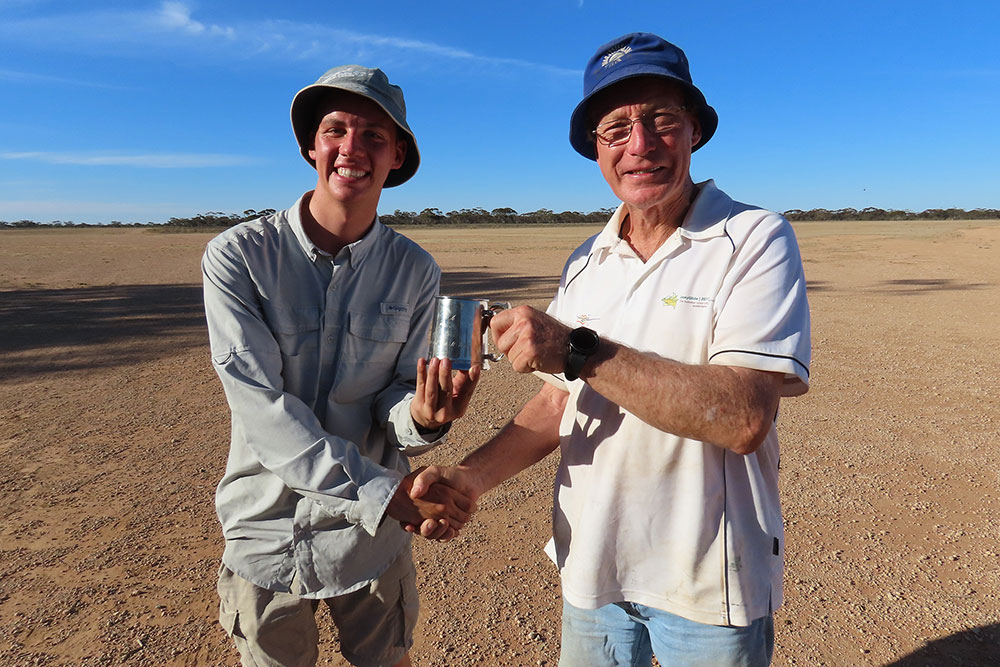
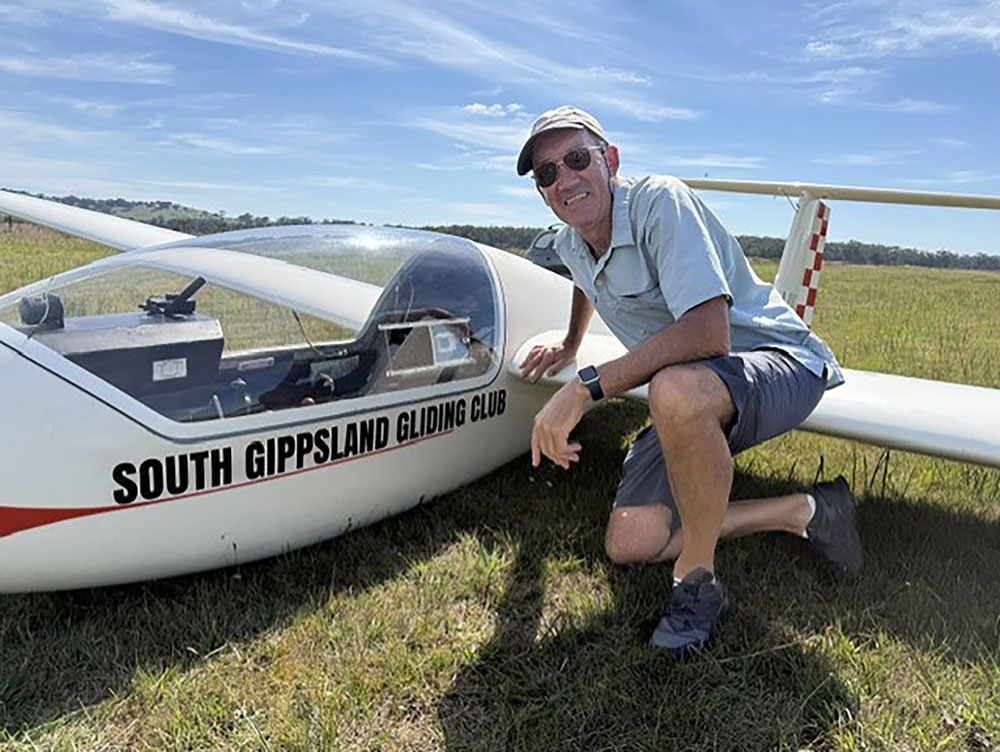
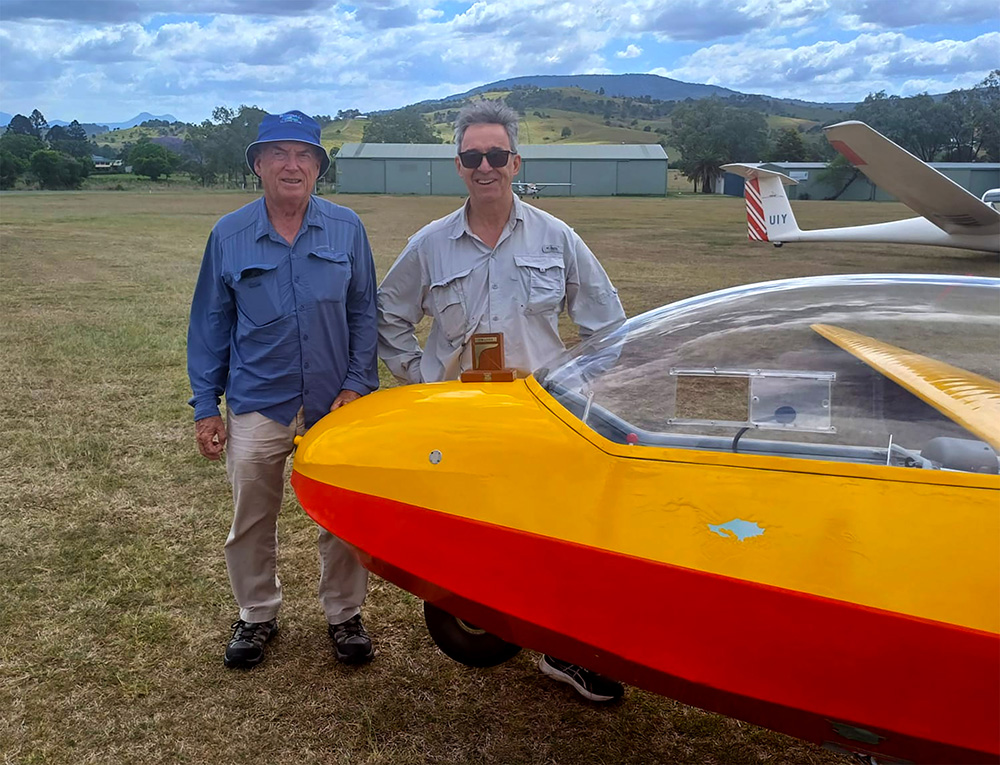
Marking three straight decades of seasonal pilgrimages to Burketown, Geoff's dedication to soaring the Morning Glory is nothing short of legendary. Geoff was the third person to soar the wave in a glider, and by all accounts, he was impressed with the experience!
It was the sheer uniqueness of the phenomenon – that mythical ‘free ride’ that pilots experience as the natural energy drives them along – that kept him coming back year after year. He returned despite the daunting challenge of navigating the vast, featureless terrain of the Gulf Country well before the advent of GPS, and despite the fact that he was often the only glider there!
Geoff took his tent with him in the glider when he flew the mere 700 or so kilometres to get to Burketown, and sometimes Jake from the caravan park would set up a tent for him so he would have less hassle in getting a spot to camp. He had a bike borrowed from Paul at Savannah Aviation on which a milk crate was fixed to the handlebars with zip ties so he could ferry his fuel and other gear back and forth, and that was it!
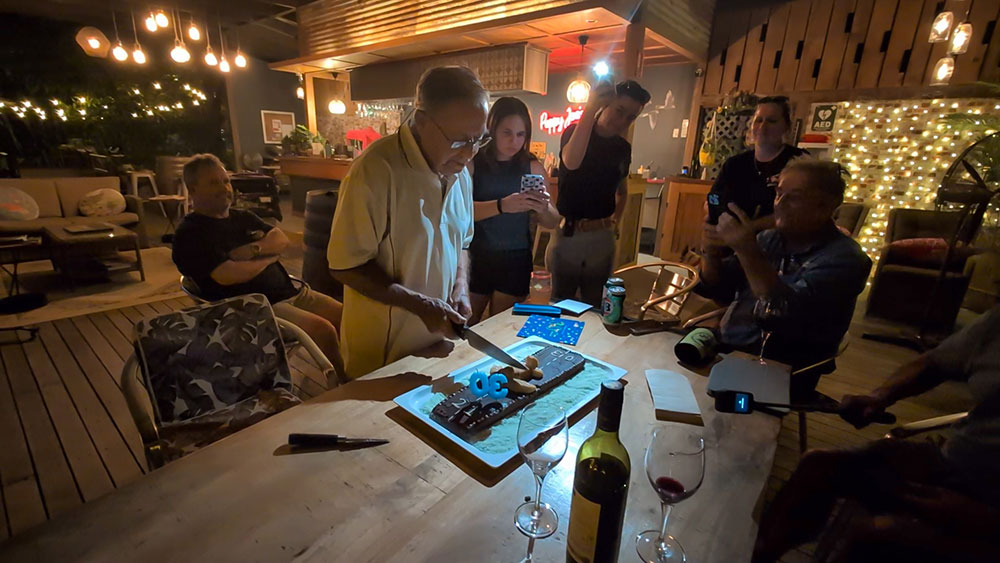
The runway cake that Billie and Amanda from Savannah made for Geoff, with a play on the runway designation 21/03, which became 30 for the cake.
Man, Machine and Meteorology
The meteorology in those days was itself a challenge. No satellite images or weather models to assist predictions. It was more about local intuition and inspecting the condensation on the outside of the local fridges the night before, which is a rustic but still reliable gauge for the high humidity that serves as the lifeblood of a good cloud formation. It was a game of patience and of watching the dawn horizon in anticipation of spotting that rolling line that might be a wave.
But when the Morning Glory finally arrives, it is a truly spectacular force of nature, and no one has mastered its fickle energy quite like Geoff. Over his thirty-year tenure, he has truly pushed the limits of what is possible on these formations, riding the waves to heights above 10,000ft and a best distance of 1,000km.
With some help from Geoff's friends, I have managed to put together a slideshow of Geoff’s MG adventures with some photos from the old days and some of the different aircraft in which he has flown the MG. If you’re interested in taking a look at this unique slice of soaring history, you can find it at youtu.be/Uboulf81Wug
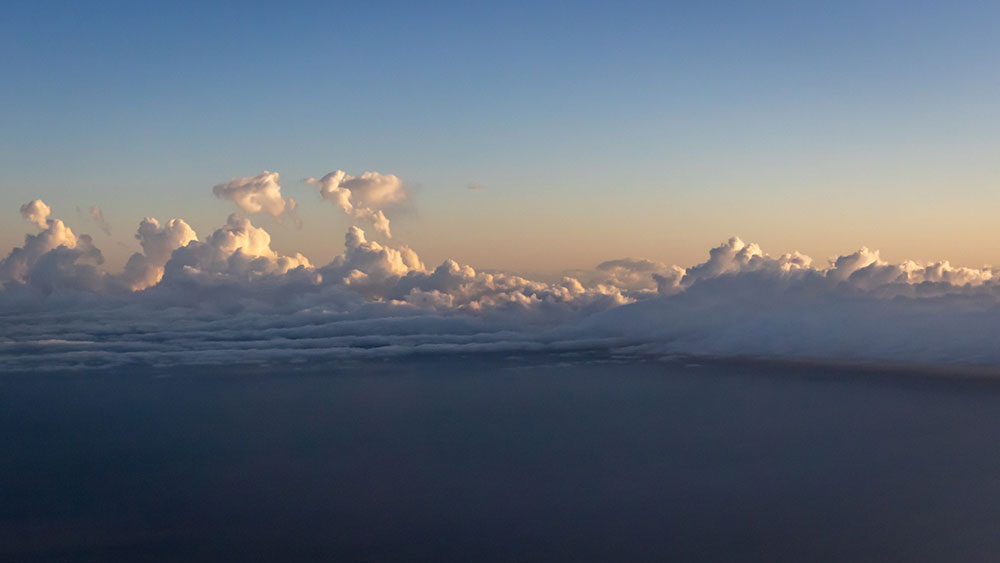
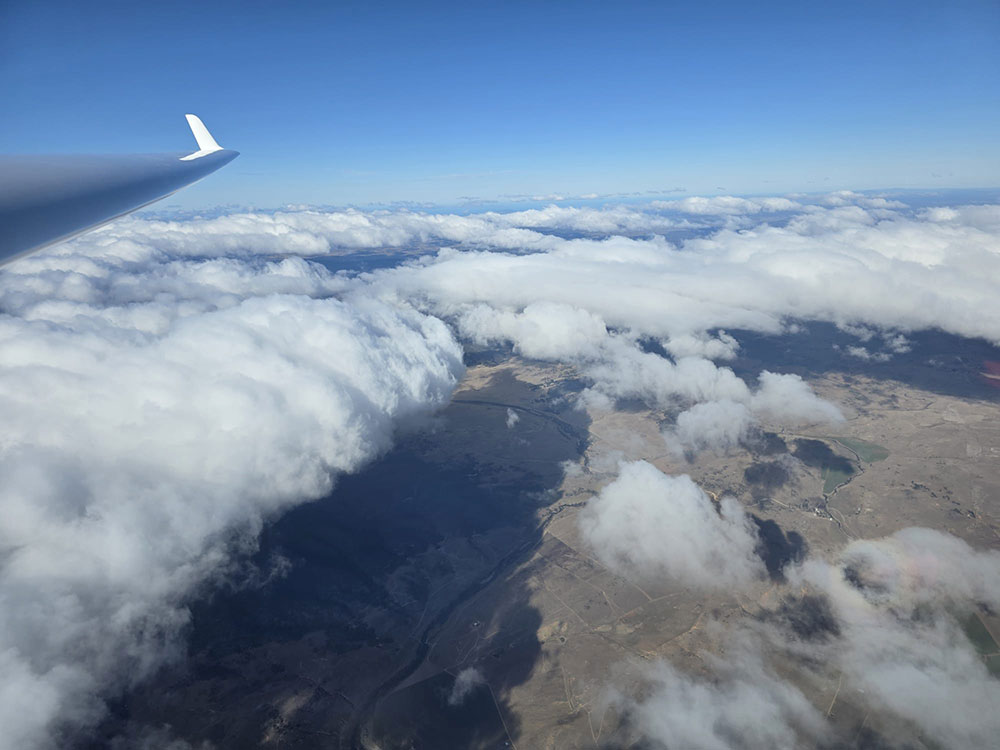
A small southerly wave system overlapping with the regular NE wave.
Runway Redevelopment
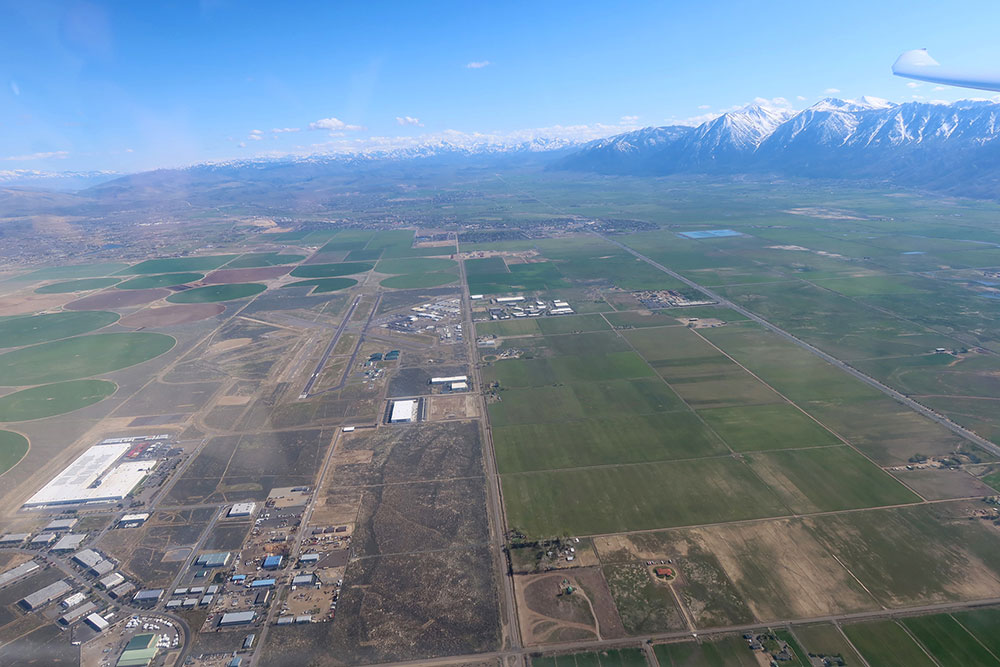
Burketown’s main runway had two issues. First, during the heavier floods, parts of the runway would go underwater, which is obviously not what is wanted, especially when it's normal for wet season access to the town to be by air only. Second, the runway length is capped by the river at one end and the town at the other. What the Burke Shire wanted was to relocate the airport to a flood-proof location and also to leave room for extension so that larger aircraft could be brought into the town in the future.
The federal government, however, stumped up money for floodproofing the existing runway, so at about Easter time, the graders moved in and reconstructed the old cross strip, and a refuelling facility was installed. Then they started tearing up the main runway.
The plan was to raise it about half a metre, which is what was needed to get the runway above the catastrophic flood level that had been experienced a couple of years earlier. This temporary cross strip was quite adequate, except for the rather cantankerous refuelling station, which degraded from being somewhat unreliable to simply not working at all… Furthermore, any attempts to have it fixed were hampered by a good run of barramundi fishing, which saw the technician busy elsewhere.
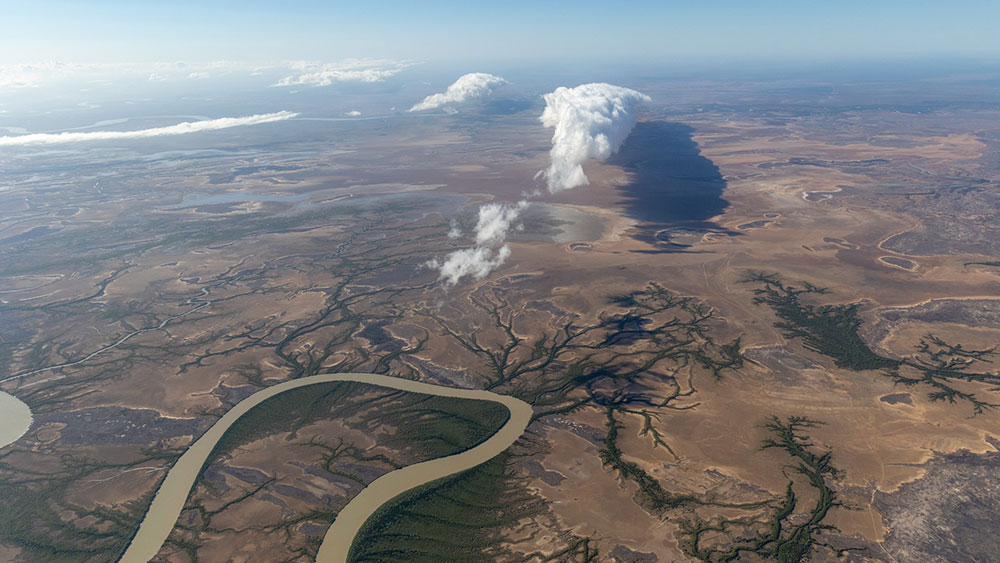
A broken, patchy wave that sort of had lift along it, if you could sniff it out.
Marooned
But then, during our stay, the freshly paved, glorious main runway finally opened for business – at the exact millisecond the temporary strip was officially closed. The kicker? It was physically impossible to taxi aircraft from one to the other. Both us gliding folk and the local commercial operator, Savannah Aviation, were now marooned in an aeronautical purgatory where we couldn’t get to the new runway because we couldn’t leave the old runway.
After some hurried diplomatic negotiation with the local runway safety staff, we finally reached a peace treaty. He graciously agreed to remove the dreaded white crosses, allowing us and the resident Savannah Aviation fleet to launch from the temporary strip and perform a maiden touchdown on the pristine new tarmac. Victory!
Or so we thought.
We had successfully upgraded from a temporary runway with a dodgy, temperamental pump to a shiny new runway with... absolutely no fuel pump system whatsoever. Apparently, in the rush of laying all that beautiful asphalt, somebody entirely forgot to schedule the commissioning of the bowsers. Minor detail, really. Who actually needs fuel in an airplane?
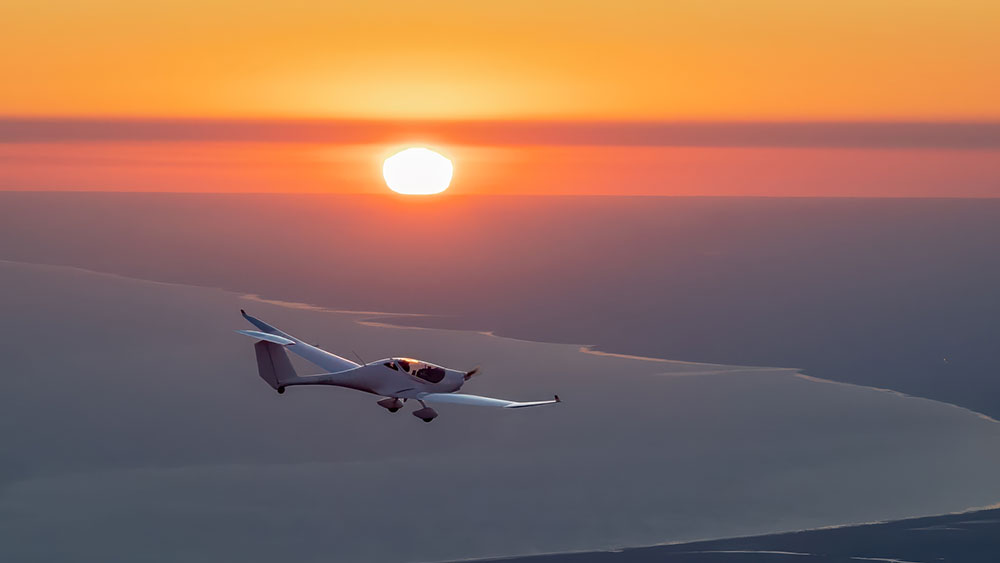
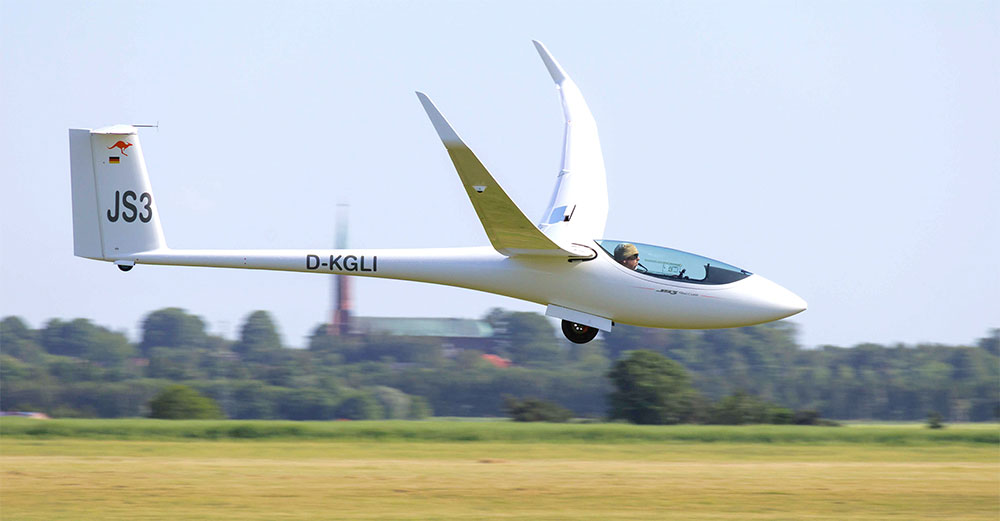
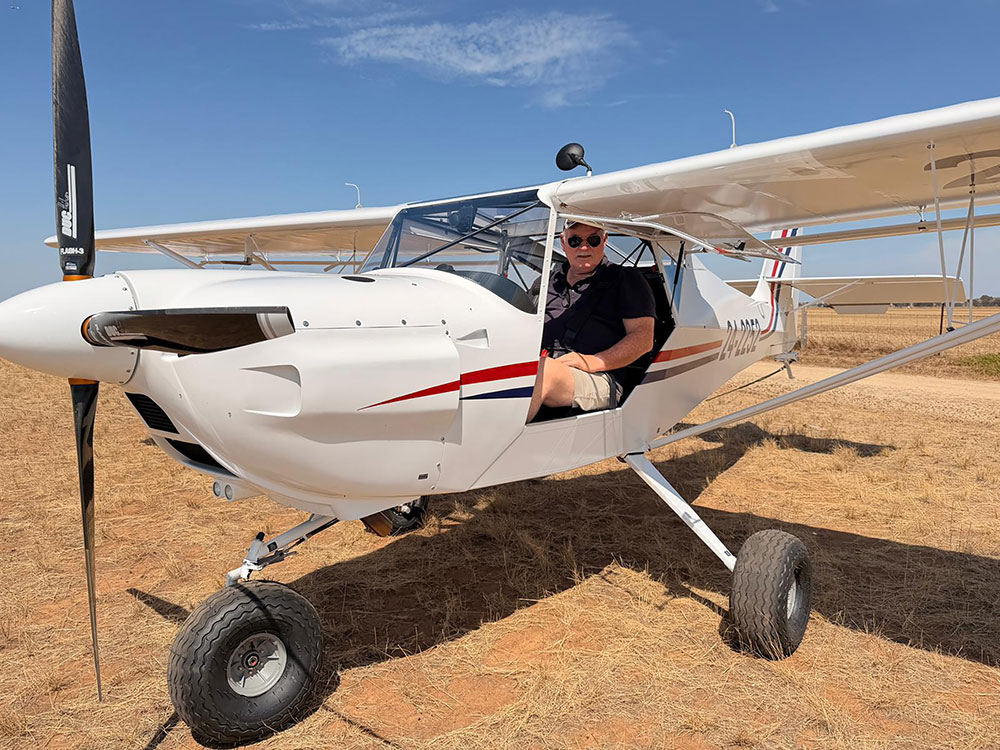
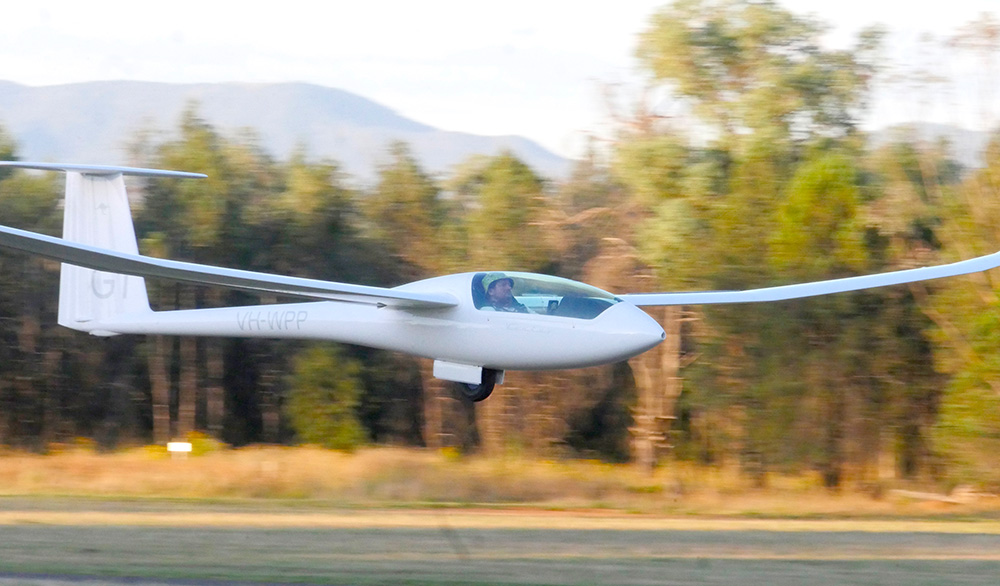
Barry flying his Phoenix at dawn.
Grand Opening
But the absolute pinnacle of this bureaucratic masterpiece was the Grand Opening of the new runway. How does a construction company celebrate the opening of a vital piece of aviation infrastructure? By immediately closing it for three days!
They erected a grandstand, hired a couple of bands, and threw a massive tarmac party where actual aircraft would only get in the way and were therefore excluded.
Even better, just in case we had any wild ideas about retreating, the bulldozers were already actively tearing up the temporary strip in the background. To be fair, they did make a provision for commercial traffic to use the runway (not the apron) if the users gave 24 hours prior notice, and emergency traffic such as the RFDS could land with only 30 minutes' notice.
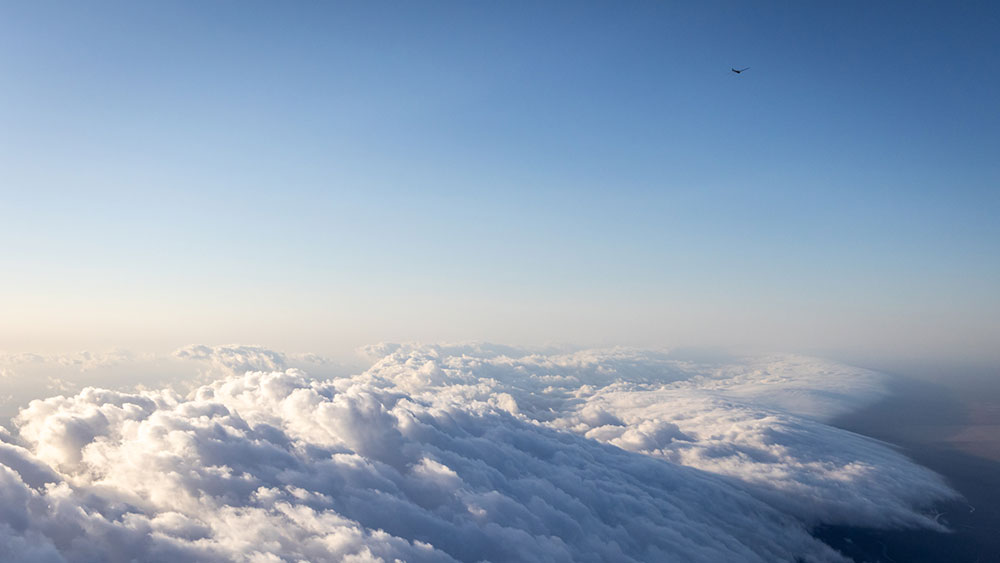
Mr Spiller showing us how it’s done by skying out (top right) on the wave
Catching the Waves
Despite juggling these rather odd obstacles, we actually did manage to catch a few waves in between the madness. This was my 9th year of chasing these elusive waves, and this year they proved especially elusive. While the number of waves soared was pretty much on par, the quality wasn’t.
None of the smooth, rolling, horizon-to-horizon waves were encountered. Instead, we had to hunt for our prey, typically by flying some distance away to get onto them. Even then, they were rather odd, with some strange winds that seemed to mess things up somewhat.
But still, plenty of hours and hundreds of kilometres were soared sans engines. Was it worth it?
Hell yeah! It was still an awesome adventure with its challenges and rewards. Some great camaraderie was found out there in the remote countryside, very good barra fishing was had by those who ventured in that direction, and the awesome vanilla slices at Hells Gate Roadhouse can't be missed. Oh, and there’s a nice big(ger) runway and apron planned for next year – well, unless more construction starts in the meantime...
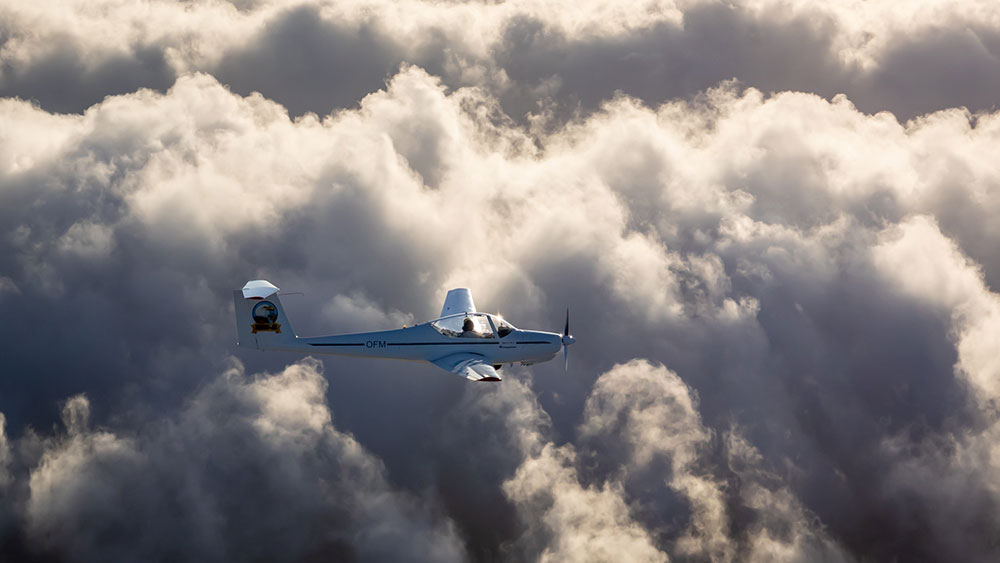
Bill flying his Taifun on a wave