Better information, earlier action and improved feedback to members
Occurrence Investigation and Just Culture Workshops
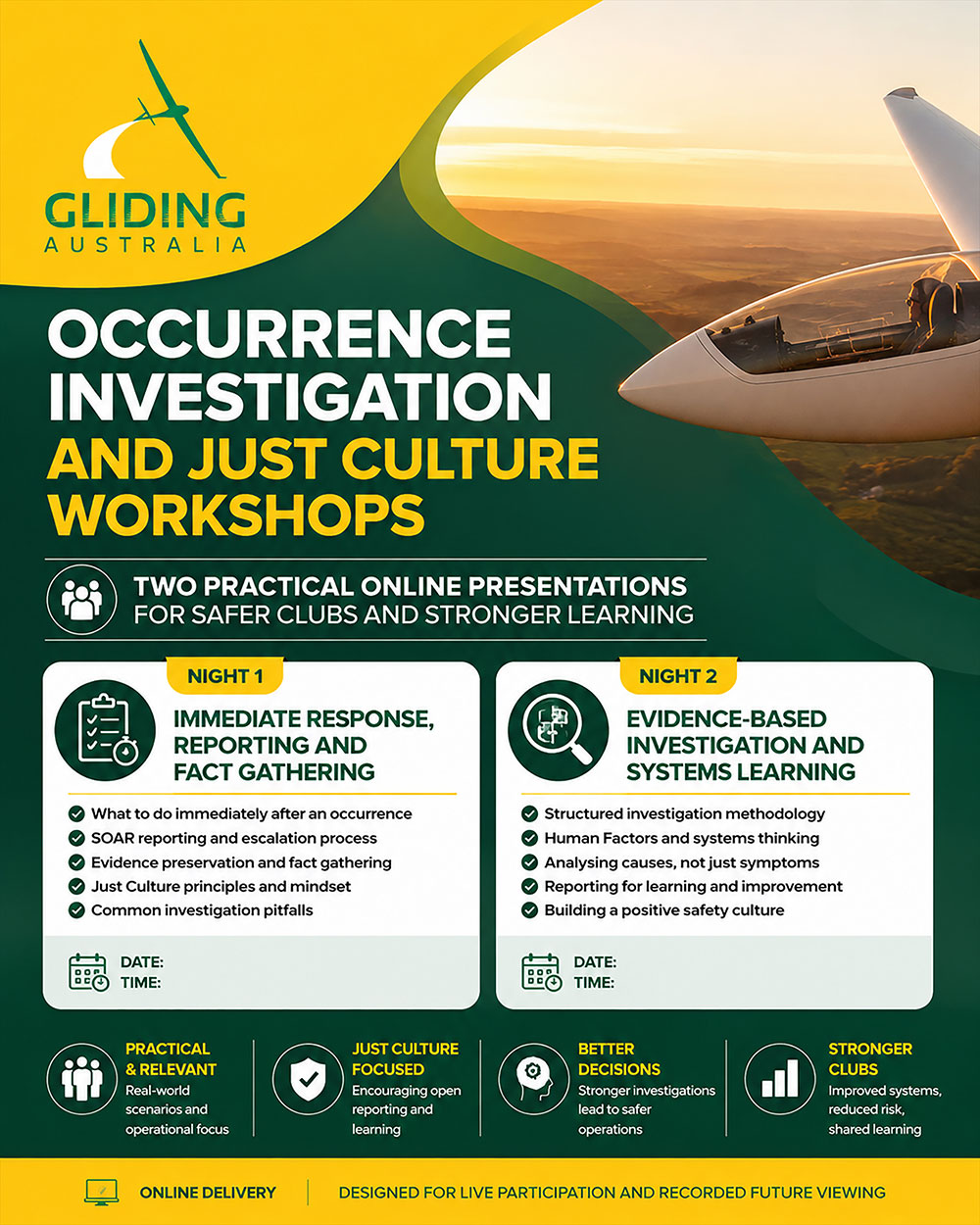
The two-part Occurrence Investigation and Just Culture Workshops have now been completed. The first workshop covered the immediate response to an occurrence, SOAR reporting and escalation, preserving evidence, gathering facts and some of the common pitfalls in investigations.
A lot has been happening within Operations over the past few months. Some of this work is now becoming visible to members. Other work has been done quietly in the background. All of it is aimed at improving how we manage safety information, communicate with members and represent gliding interests.
The second workshop focused on structured, evidence-based investigations. It included Human Factors, systems thinking and the importance of analysing causes rather than simply identifying symptoms. It also looked at how good reporting and investigation can build a positive safety culture.
A key theme across both workshops was Just Culture. This means encouraging open reporting and learning while still recognising individual responsibilities. The purpose of an investigation is not to find somebody to blame. It is to understand what happened, why it happened and what we can do to reduce the chance of it happening again. The workshops were practical and based on real operational situations. They were designed to help clubs make better decisions, conduct stronger investigations and turn individual occurrences into shared learning.
This training was fundamental to our work in tackling the SOAR backlog. It has also helped us develop a clearer and more consistent process for reviewing SOAR reports across Gliding Australia.
The workshop recordings are now available on the Gliding Australia YouTube channel. I encourage CFIs, instructors, Regional Managers Operations and anyone involved in reviewing occurrences to watch them. A new Operations Advice Notice covering the revised SOAR process will be released shortly. It will explain the responsibilities of the SOAR originator, club CFI, RMO and the national office. It will also explain how departmental, specialist and safety input will be brought together before a report is finalised. There is still work to do, but we now have a much better foundation.
Website Improvements
A considerable amount of work has also been completed on the Gliding Australia website.The new website infrastructure has been approved and the previous interfaces to Salesforce have been removed. This was important. Gliding Australia was facing a nightmare of ongoing software licensing fees if the previous arrangements had been continued. Getting this work completed required a real team effort. Sharon Brunton, our IT Manager, led much of the work. Ian Munroe, our Salesforce consultant, provided the specialist support. Yours truly also contributed where I could. We now have new website pages for published SOAR reports and Service Difficulty Reports. This is more than a website change. It is an important part of improving the feedback loop to members. People take the time to submit SOAR reports and SDRs. We need to show how those reports have been considered and what we have learned from them. The new pages will make safety and technical information easier to find. Over time, they should help members identify recurring issues before they become accidents.
CASA Consultations Need Your Input
We also have a considerable amount of regulatory work ahead of us. CASA currently has several proposals and consultations that may affect gliding. These range from proposed annual charges for VH-registered aircraft to allowing some drone operations above 400ft. These proposals can have consequences that are not always obvious to people outside our part of aviation. A proposal that appears reasonable for powered aircraft or commercial operators may create a very different risk for a glider operating cross-country, soaring over an open-cut mine or searching for a safe outlanding area. Gliding Australia will continue to prepare formal responses where required. However, feedback from individual members and clubs is also important.
Please read the consultations and make a submission. You do not need to write a legal document. Explain, in plain language, how the proposal may affect your flying, your club or the continued operation of your aircraft. If we do not explain the effect on gliding, we cannot assume that somebody else will.
Protecting Airfields and Gliding Operations
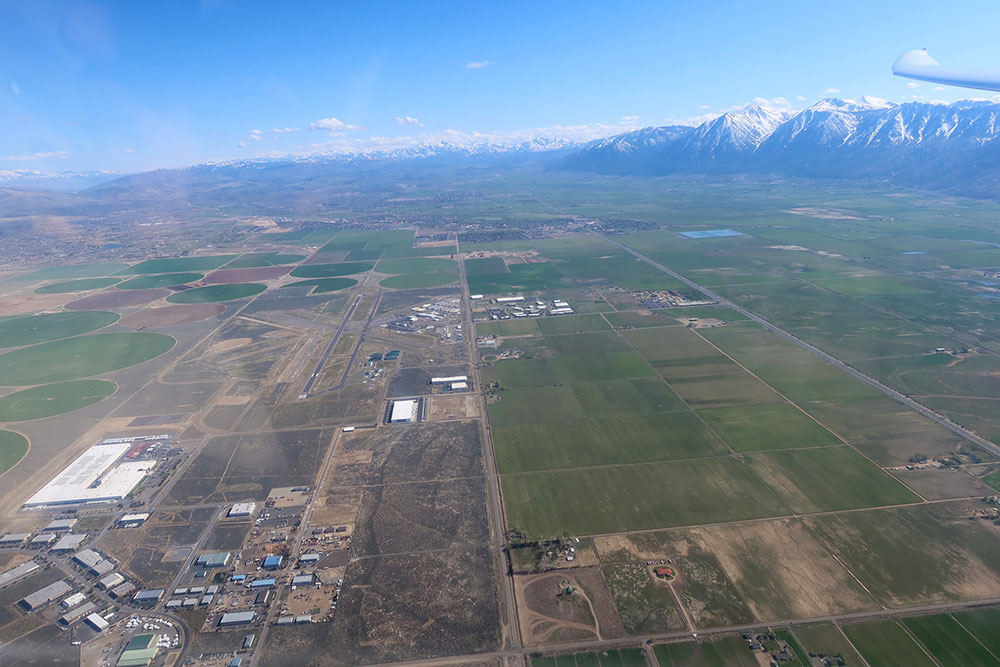
We are also facing a growing number of battles involving airfields and nearby development. Some airfields are under pressure from urban encroachment, changing ownership, planning decisions and increasing operating restrictions. At the same time, energy developments are creating new issues for gliding operations.
Wind farms close to airfields can affect circuits, training areas, launch operations and cross-country routes. Solar farms can remove paddocks that may previously have provided emergency landing options. Transmission lines, towers and other infrastructure can create further hazards.
These developments are often supported by aviation risk assessments. Unfortunately, those assessments do not always properly consider sports aviation. They may focus on airlines, commercial operations and the larger airports – the big end of town – while giving little attention to gliders, recreational aircraft and unpowered flight.
To improve our response, Gliding Australia has brought Operations and our Airspace, Aerodromes and Avionics Officers closer together. The first of these coordination meetings was held this month.
The aim is to identify proposals earlier, share information and provide better input into planning processes. We want aviation risk assessments to properly describe the risks to sports aviation, not simply conclude that there is little effect because airline operations are not involved. Early involvement is critical. By the time construction begins, it is usually too late to achieve meaningful change. Members and clubs can help by telling us about planning proposals near their airfields. Do not assume that Gliding Australia already knows. Local knowledge is often the first warning we receive. There is plenty of work ahead. However, the improvements to SOAR, the website and our coordination of airspace and airfield matters show what can be achieved through good teamwork.
Dave Boulter
executive manager operations