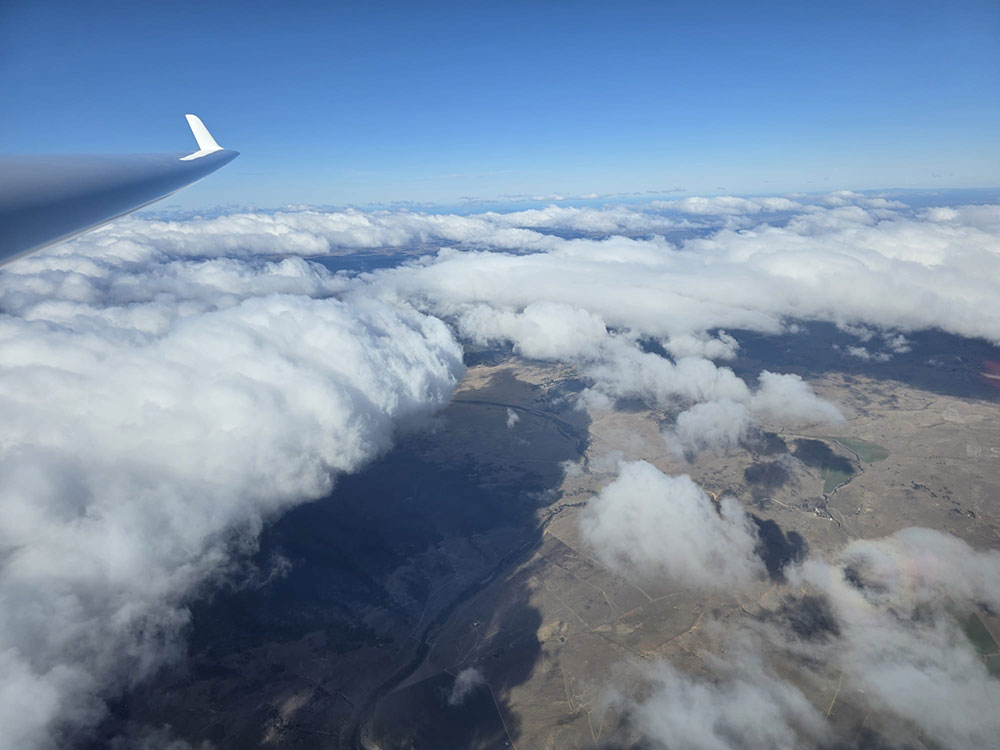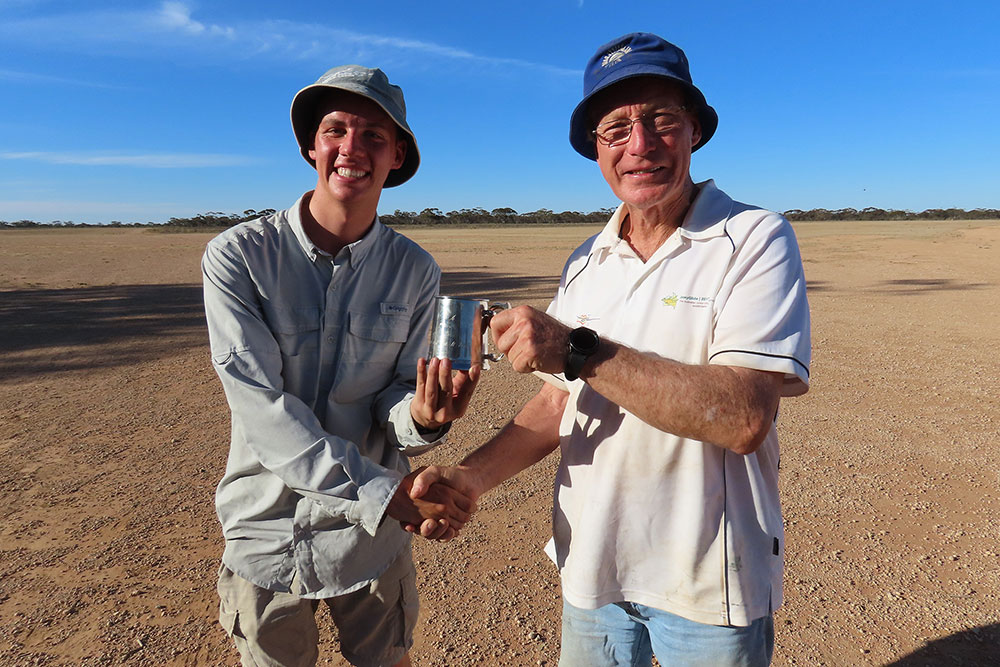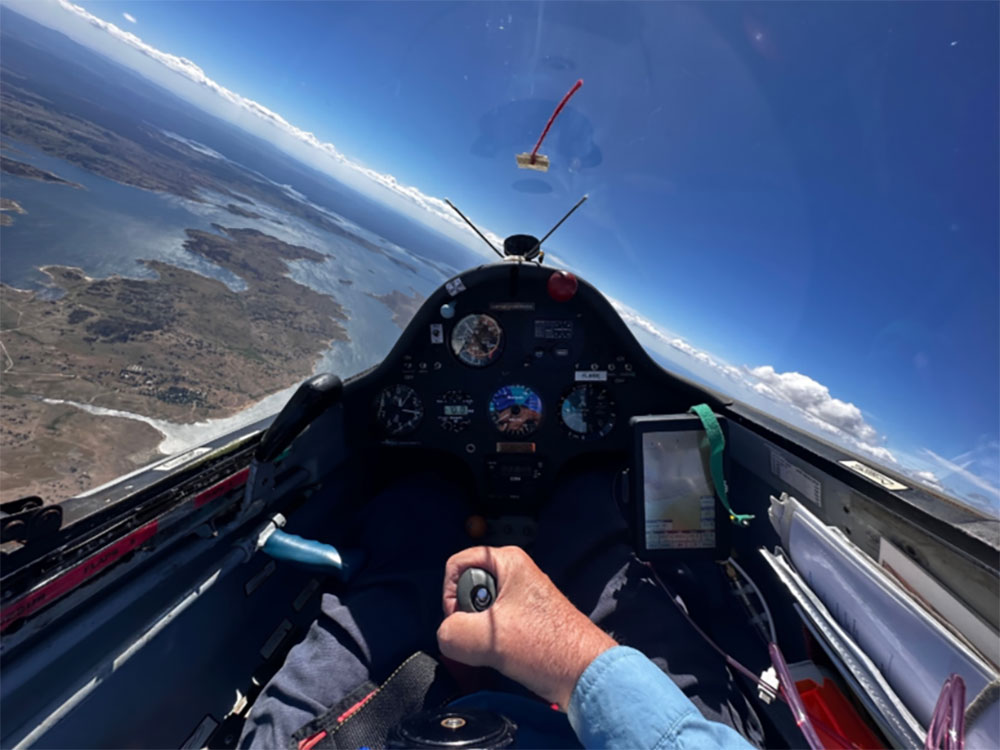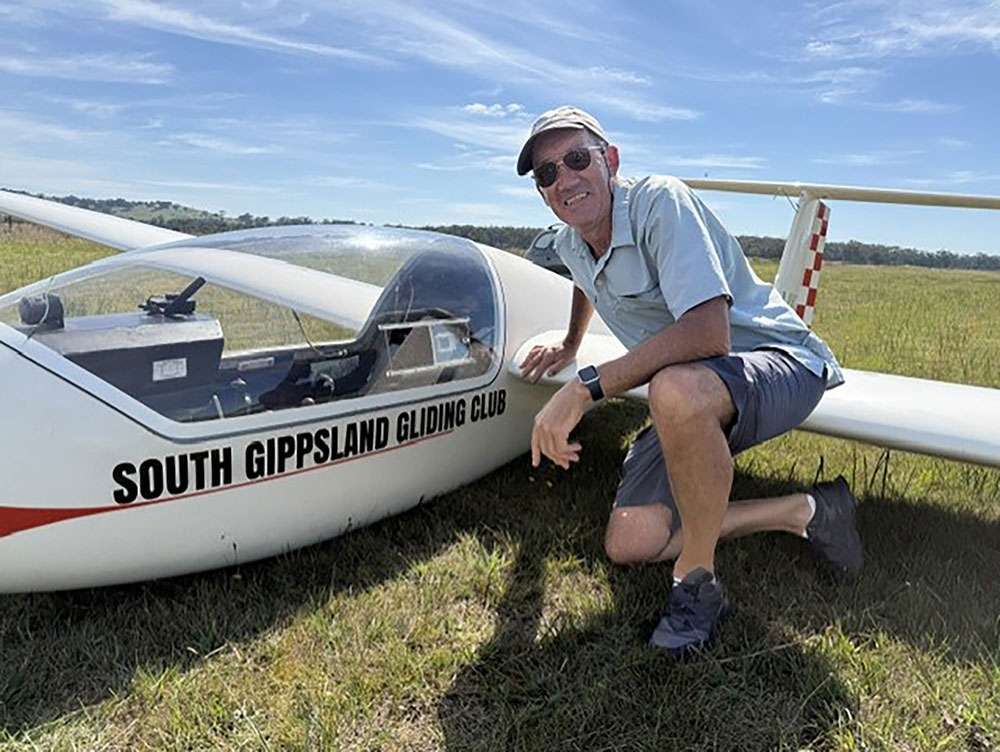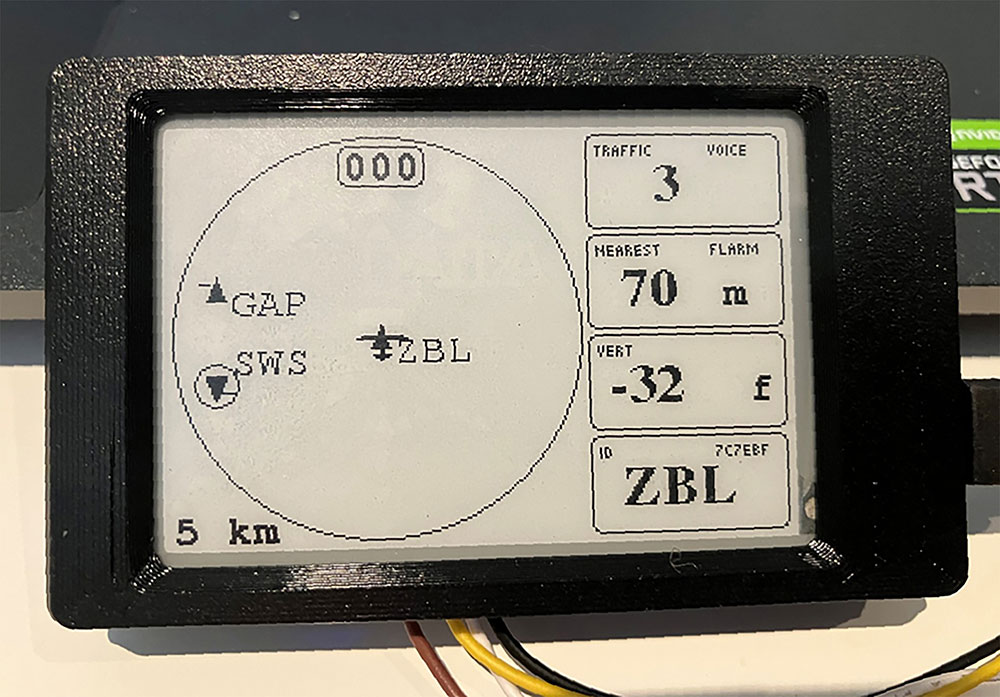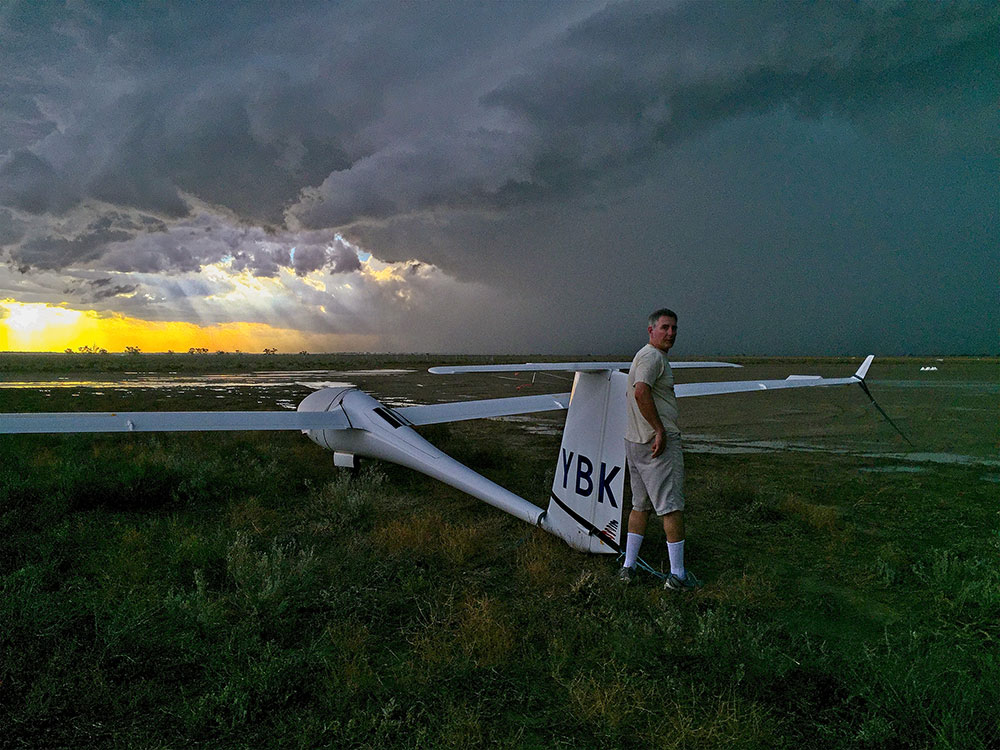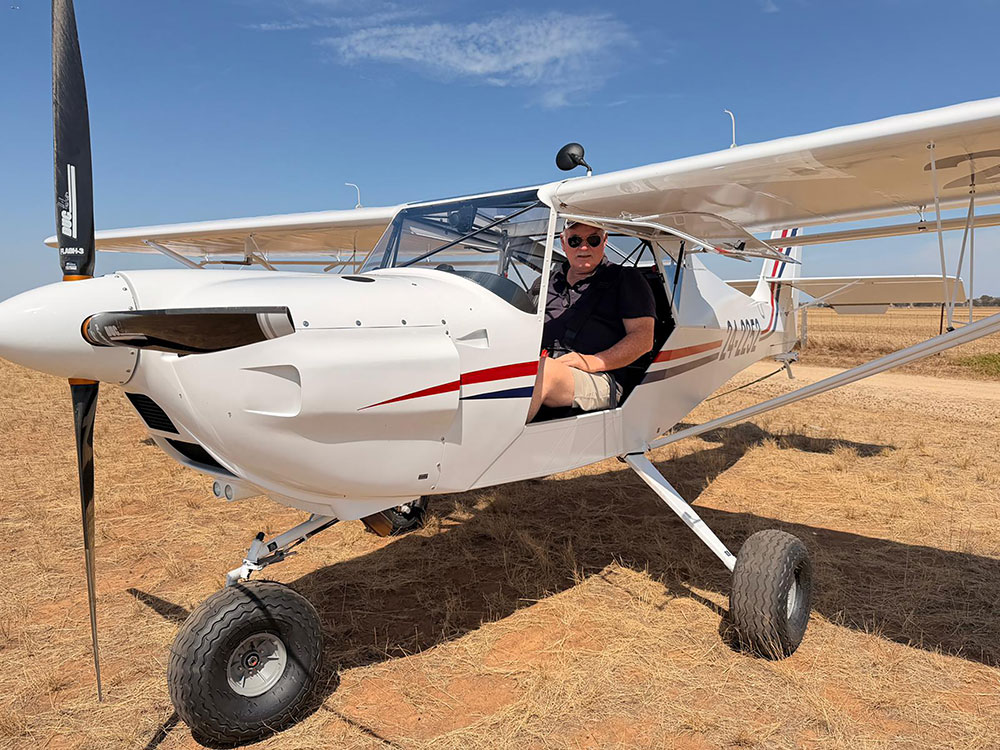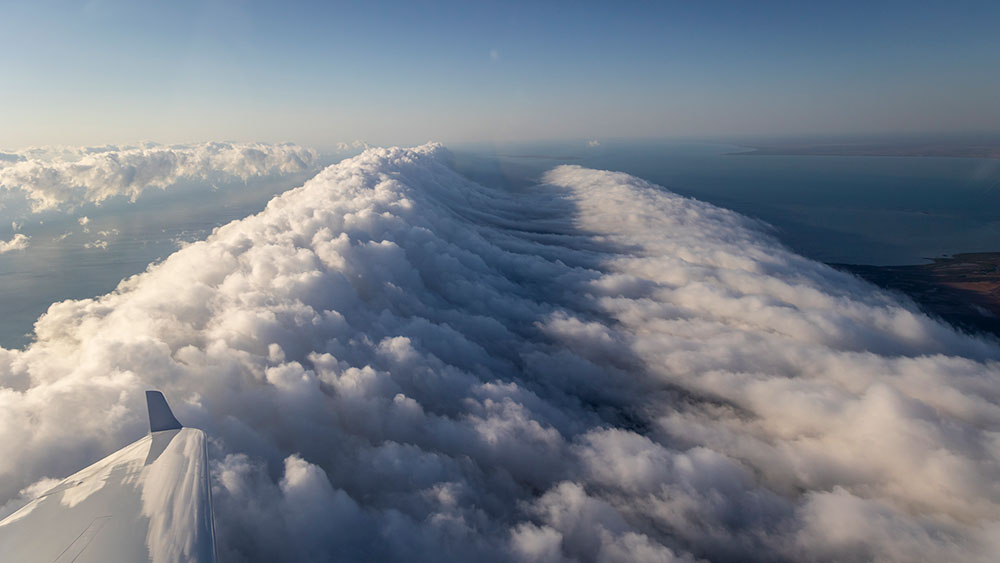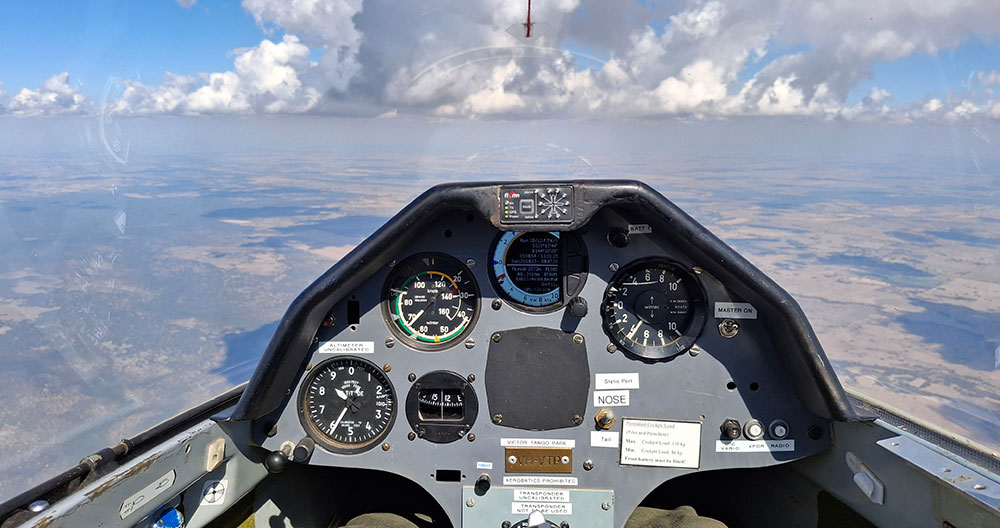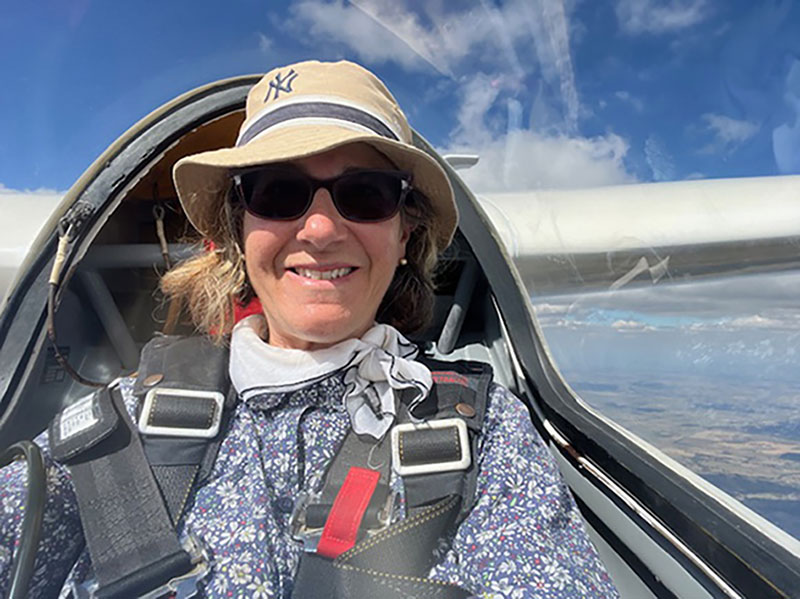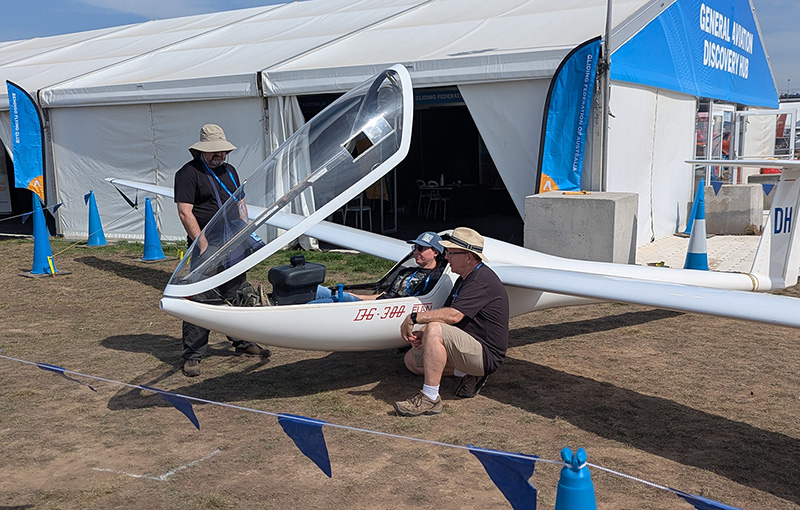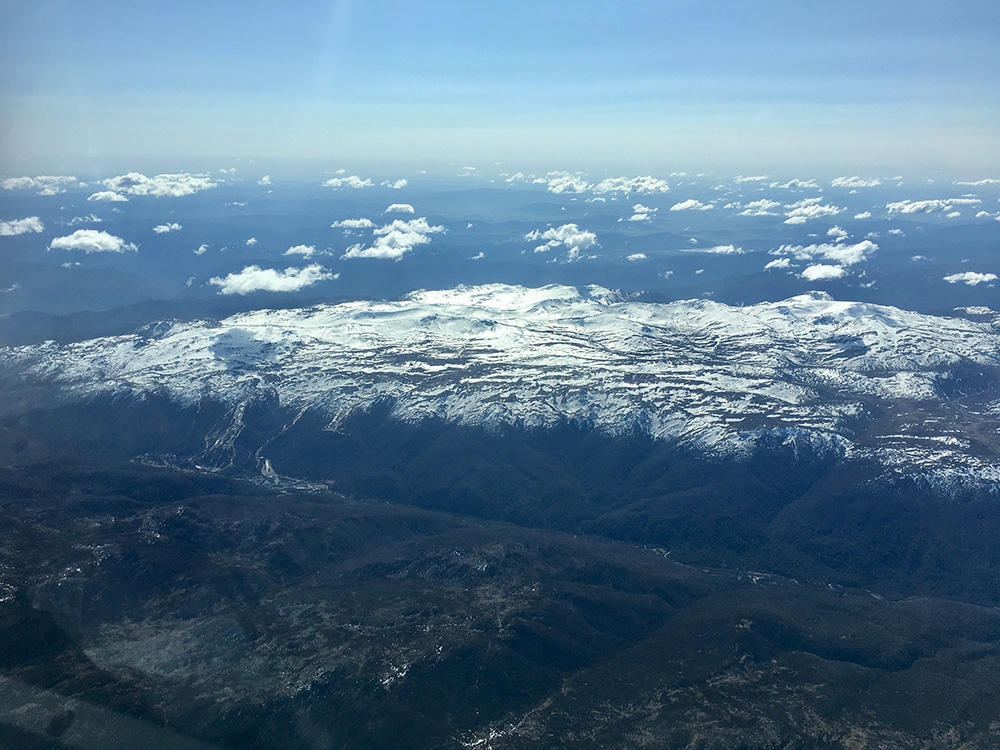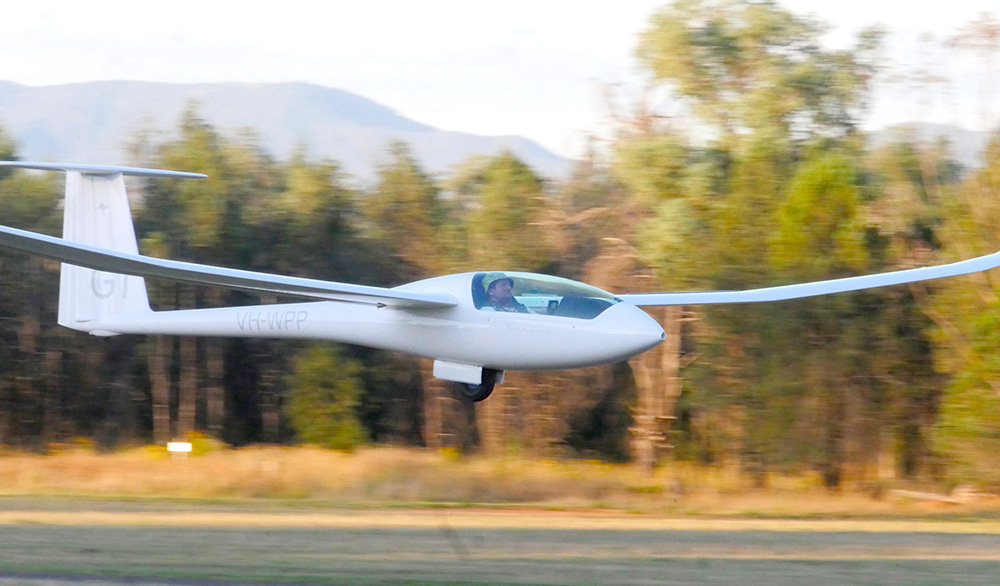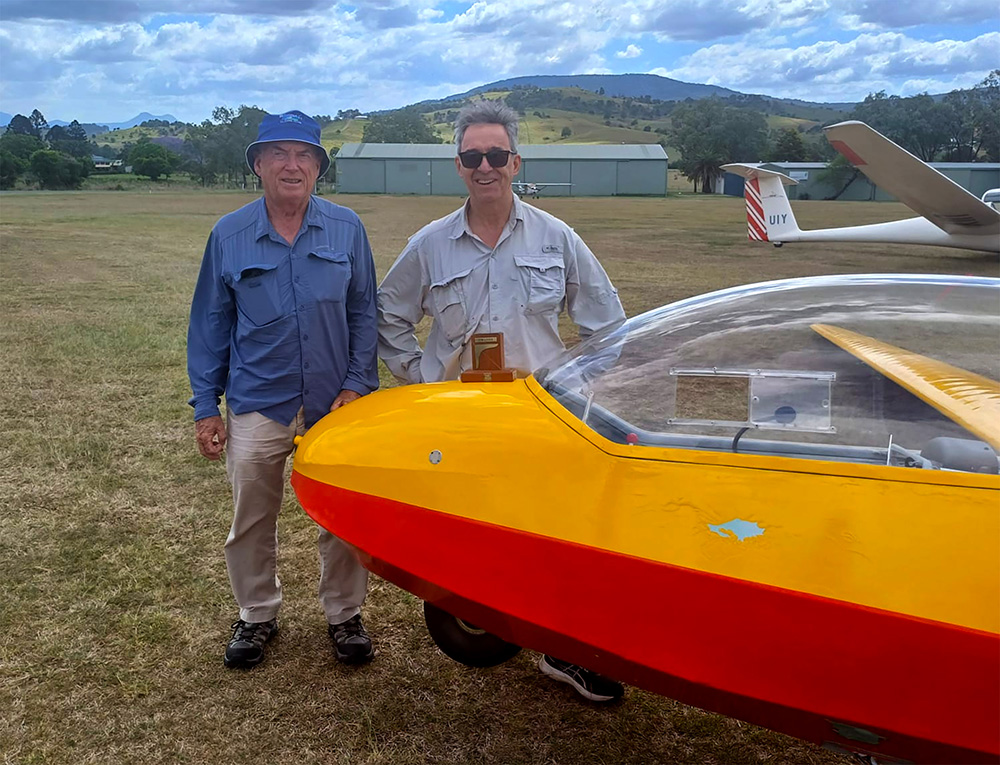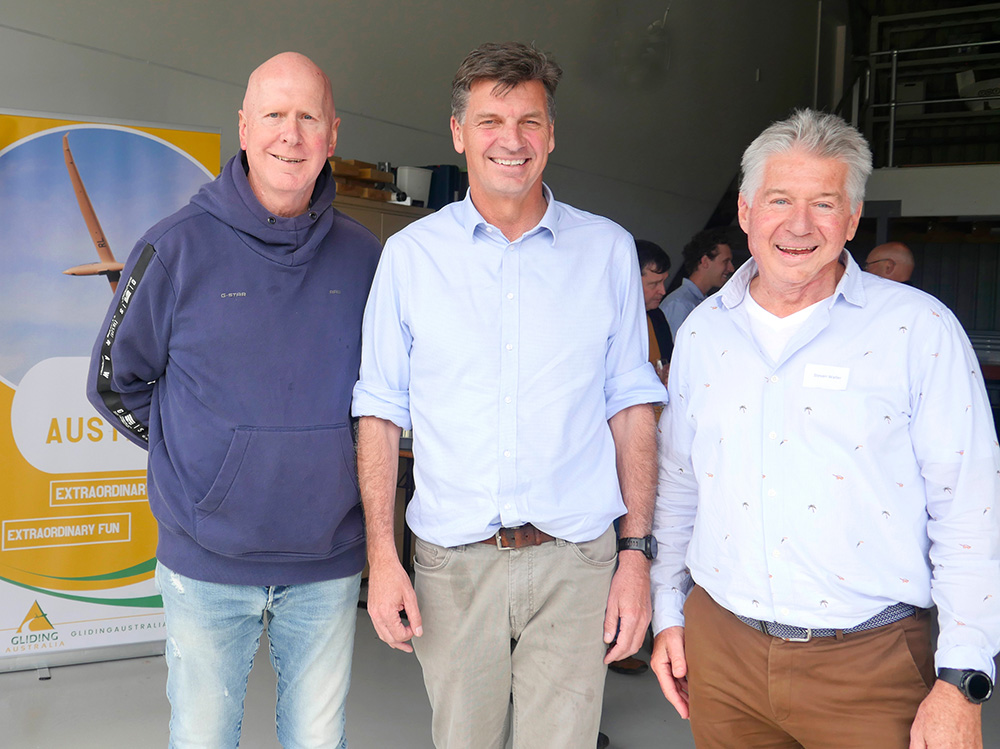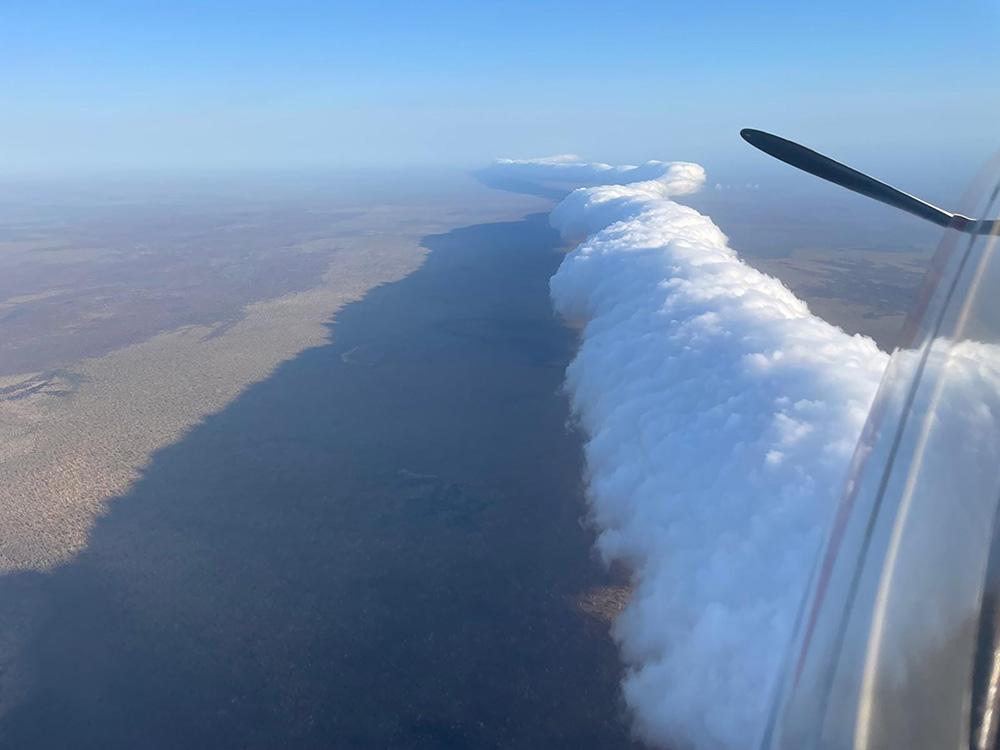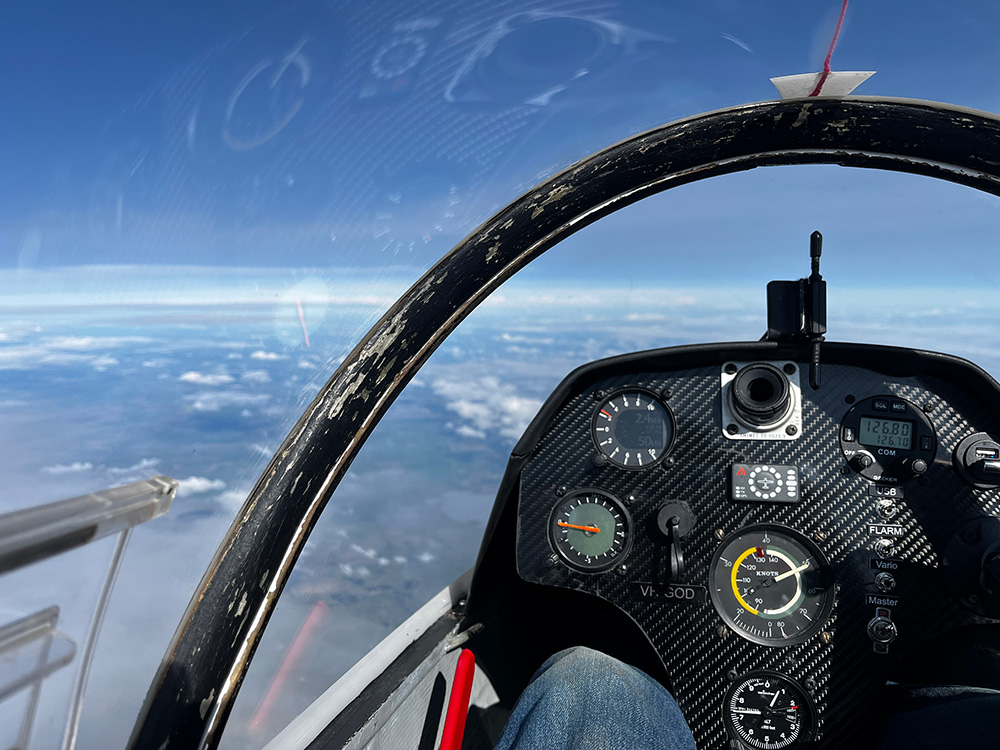
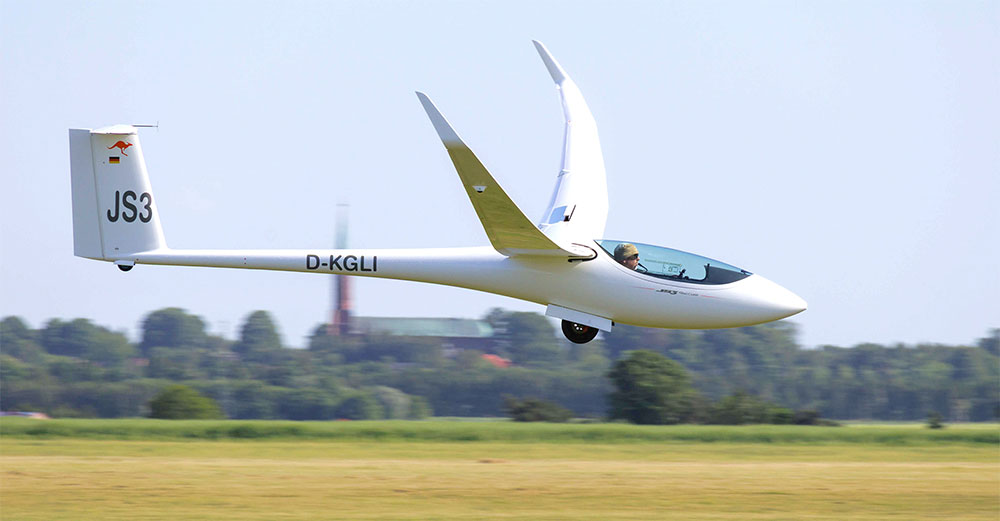
ABOVW and BELOW: Lumpy Paterson flew a JS3 in 18m Class.
By Phil Ritchie Australian Team Captain
Photos: Various CONTRIBUTORS, including WGC Poland
At the 40th Multiclass World Championships, Poland pulled out more than a few pleasant surprises. The competiton was held in May 2026 in Czestochowa, about 2 hours drive south of Warsaw. If you are like me, Poland may not top your list of desirable destinations when considering a gliding holiday or competition, but as it turns out, it is as good as it gets. The WGC pilots flew more competition kilometres than at any previous world gliding championships and flew the longest competition flight at a World Comp. Even better, all this happened in May – not even at the peak of the season!
However, unlike any Australian gliding competition, record beating flights are hoped for but rarely experienced. The absolute ceiling, due to airspace, was FL 95, and it was common for heights not to exceed 6,500ft. Cumulus were seen most days, but large blue areas were a common feature. Airspace was a significant restriction and a trap for the unwary. Freezing levels were often near cloud base, making cockpit comfort a problem.
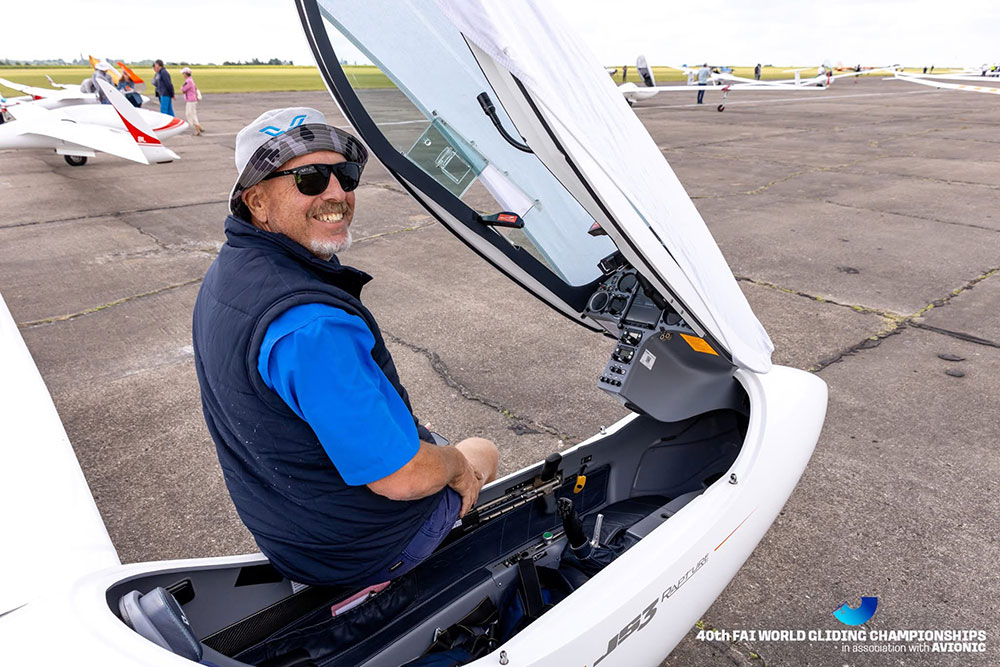
An Unlikely Gliding Mecca
Does this sound like a gliding Mecca? No, but you'd be wrong to think so. Ten competition days were flown. Thermal wave occurred prior to start on multiple days. Outlanding options were not on a level with Australia's abundance but were by no means scarce. Real outlandings were rare and technical outandings – given that this was the top end of gliding and Means of Propulsion were a common feature of most of the gliders – not too significant.
So, who wants to go gliding in Poland now? But wait – there's more. Poland is largely flat land flying so we Australians wouldn't be too stressed. It is an amazingly friendly country as well and, given that it's in Europe, pretty economical. The language is impossible but most speak some English and your phone translator will do the rest. Their local gliders are heavily biased towards local manufacturers. Some of us even managed visit to the SZD factory on a non-flying day.
In any case, Australia fielded five pilots and four gliders at this event. David Jansen flew his brand new – and I mean brand new – previously unflown JS5 in Open Class. Adam Woolley and Keith Gateley flew a borrowed Arcus M in the Two-seater 20m Class. Norm Bloch and Lumpy Paterson flew JS3 Jets in 18m Class, also in borrowed gliders.
Determination, Patience and Skill
Adam and Keith gave us our best results, finishing a very respectable 4th place overall. Their top performances were a win on Day 4 and a 2nd place on Day 8. But for those watching on the ground, the heart stopping day came on Day 2. Adam's determination, patience and skill managed to keep them off the ground for over 20 minutes, all the while going further and further past the rained in turnpoint.
Those of us in the team tent watched as over half the two-seater fleet started their engines, expecting Adam to do the same any moment. However he eventually got a good climb and headed back to the turnpoint and then had a solid run home. Almost the entire fleet were Arcuses, either M or T models. The only exceptions were a single HpH 304 Twin Shark and a single ASG 32 Mi. David managed a day win as well. Flying his beautiful JS5 for the first time only a couple of days before the start of the competition meant facing a steep learning curve, meanwhile sorting out the teething issues associated with a new glider. Frustration was a big factor for David but he was very fortunate that the Jonker Sailplanes team was on hand throughout the competition to sort out problems as they arose. They even provided him with ground crew, as his wife was unfortunately unable to attend.
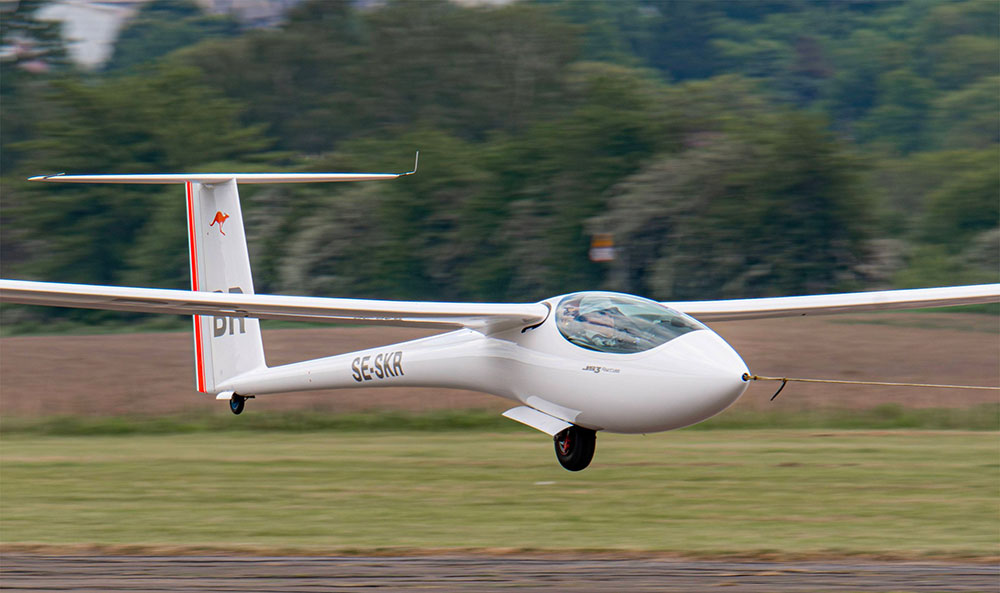
Norm Bloch landing his JS3
Australian-European Contrast
The Open Class fleet was a thing to behold. Eight EB29s, both single and dual seaters, five JS5s plus a JS1 and an incongruous JS3. The last day was a nail biter at the top in Open Class. The two Germans, Felipe Levin and Michael Sommer had been leading the competition for some time and Sebastian Kawa trailing in 3rd with quite a large margin to make up.
On the last day, however, Sebastian pulled out a blinder and it looked as though he might have taken the overall lead. But it was not to be, although he did manage to split the two Germans. By the way, did you know that Kawa means coffee in Polish? Well, now you do. So, his name in English is Sebastian Coffee.
Norm and Lumpy finished mid-field in their class. Both learned a lot about flying in Europe and how team flying is both an art and a science. They had practiced team flying at the Squad week held at Tocumwal during the last week of February plus a week of flying together in January. Their efforts to start together and fly together brought modest results and, when within range of the airfield, we could hear them talking and making decisions together. Their main weakness was lack of experience in making the best of the conditions that were often quite different to Australia's.
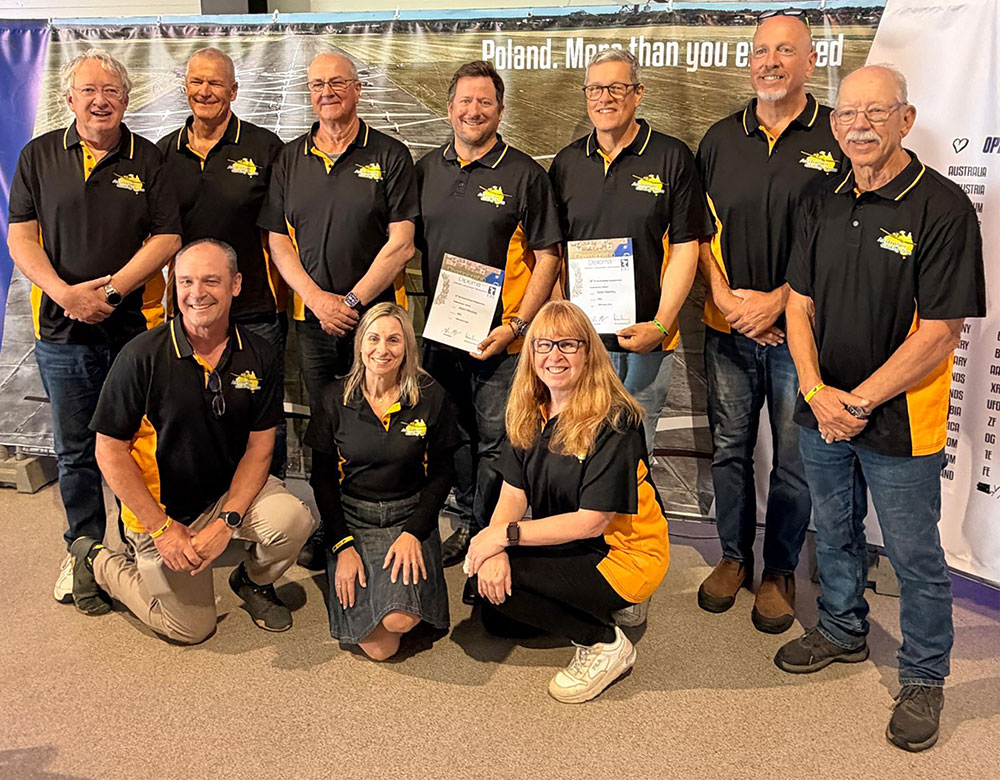
The Australian team at the final medals ceremony.
On Day 3, they trusted their own judgement and headed off on their own. This did not pay off and cost points. They learned from their mistake and from then on they kept up with the others very respectably. The 18m Class was by far the largest, fielding 42 gliders. The Jonker's JS3 was the most popular with 18, followed by 11 AS33s, 6 Ventus 3s, 4 ASG 29s, plus a couple of JS1s and a solitary DG600. Quite a few of the newer gliders were electric. The top finishers were the usual suspects, the French and the Germans. Both countries fielded very experienced pilots, who are accomplished team pilots.
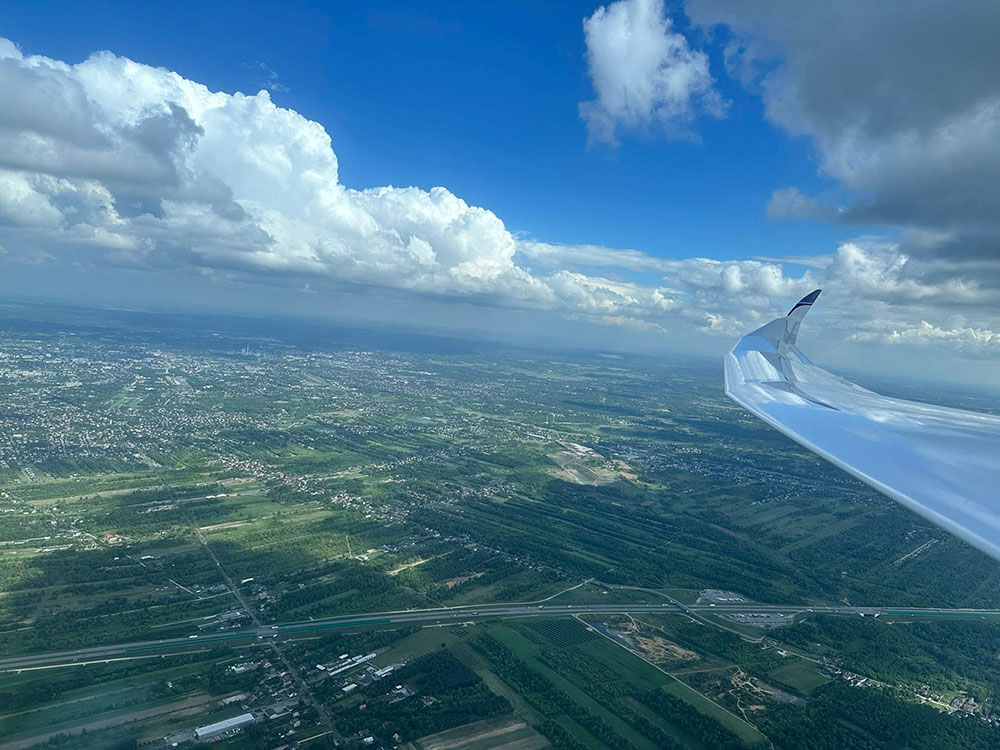
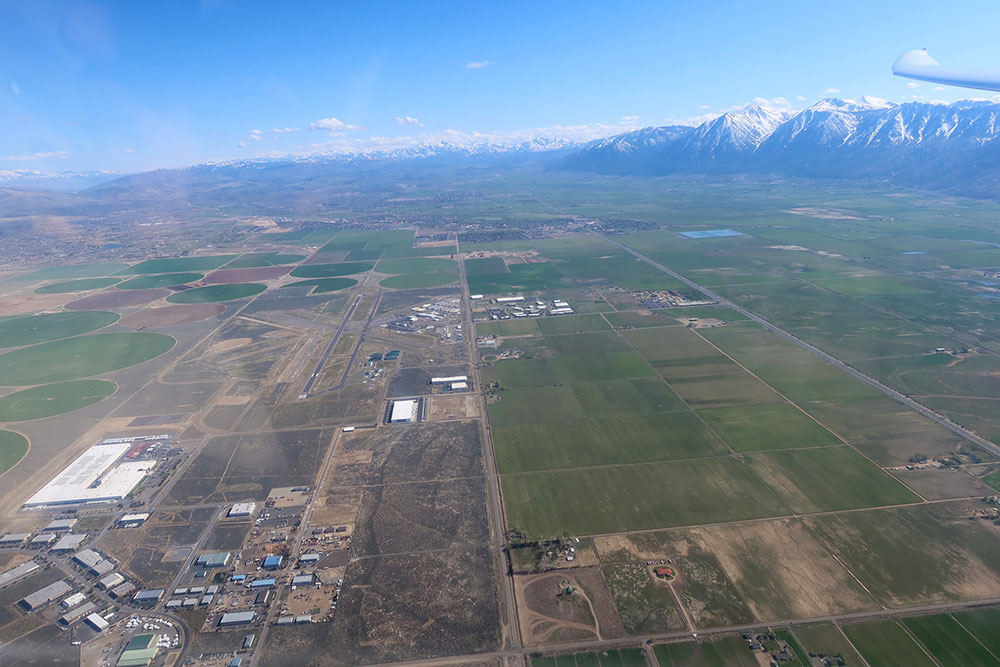
The view over Czestochowa-Rudniki
Unexpected Riches
I volunteered to be part of the team for the chance to look at the top end gliders, to meet world class pilots and to help out – as well as hang out with fellow glider pilots and have a laugh. But, in fact, I came away so much richer than I could have ever hoped for. Gliding at this end really is a team sport.
The crew were as much a part of the success and fun as the pilots. A shout out is owed to Jorgen Thomsen, Richard Dowling and his wife Barbara, Caroline Jervis and Dylan, the lad from Jonker Sailplanes. Individuals are often destined to be also-rans. The Australian pilots communicated with each other well, even if they were not in the same class, passing information about weather conditions, slow points and how well the conditions were holding up as Cu thinned out. Future pilots selected to go to world championships will have to attend Squad Week to encourage and foster the team approach. I heartily endorse this policy.
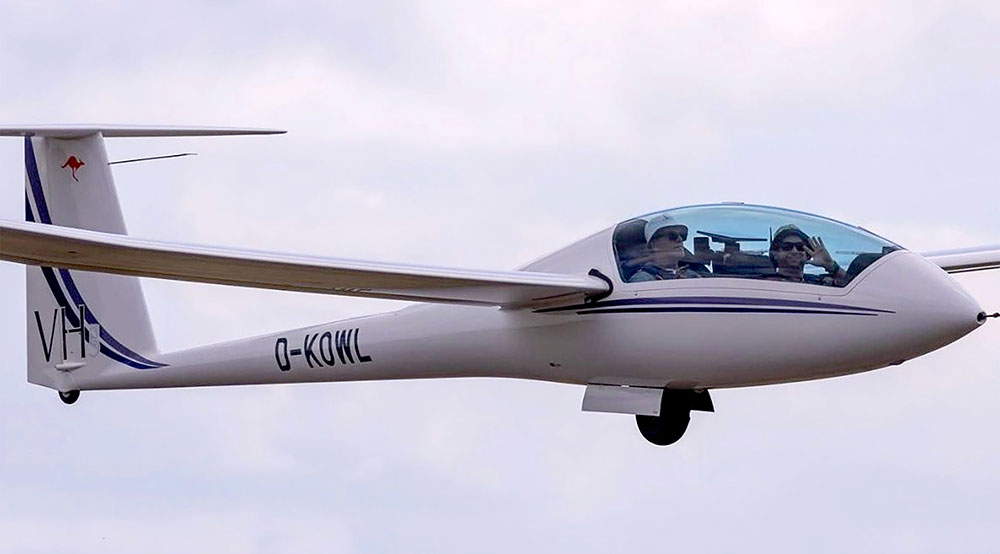
Adam Woolley and Keith Gateley took 4th place overall in 20 Metre Multi-Seat class.
Day Win for WOOLLEY & GATELEY
We're all smiles today, day winner! Thanks, Mathijs, for the glider, thanks to the crew for allowing us to focus on the flight, thanks to our team captain and team mates for super support. Thanks, Keith, for superb in-flight support.
We decided on a moderate (then late) start, despite keeping an eye on all the major players in each class starting early. A line of CU appeared though in front of the line of easy lift. When all the others had pealed off and four big players were still in the area, it was time to press the PEV again. It turned out we were last to start by 5 minutes.
This really suited me, because I could disconnect from others around me and do what I do. When I can do this, and truly believe in my abilities, then I sail. We flew our line, took our best thermals and, low and behold, we caught the French, Polish and Brits fairly quickly.
This is where I fell down. The gaggle started to disperse, looking nervous, so that's what I did. Rather than keep in my groove and do my own thing. The French got away from me again.
Again, once I could disconnect myself from those around me, I could groove again. We started picking up the others ahead just as the day started to die. Fortunately, I trusted myself again and flew my own line, getting within striking distance at the last TP.
I matured up at that moment, decided just to latch onto the back of the Belgians and the Dutch, cruise control home, we were confident that we'd done enough.
Adam Woolley
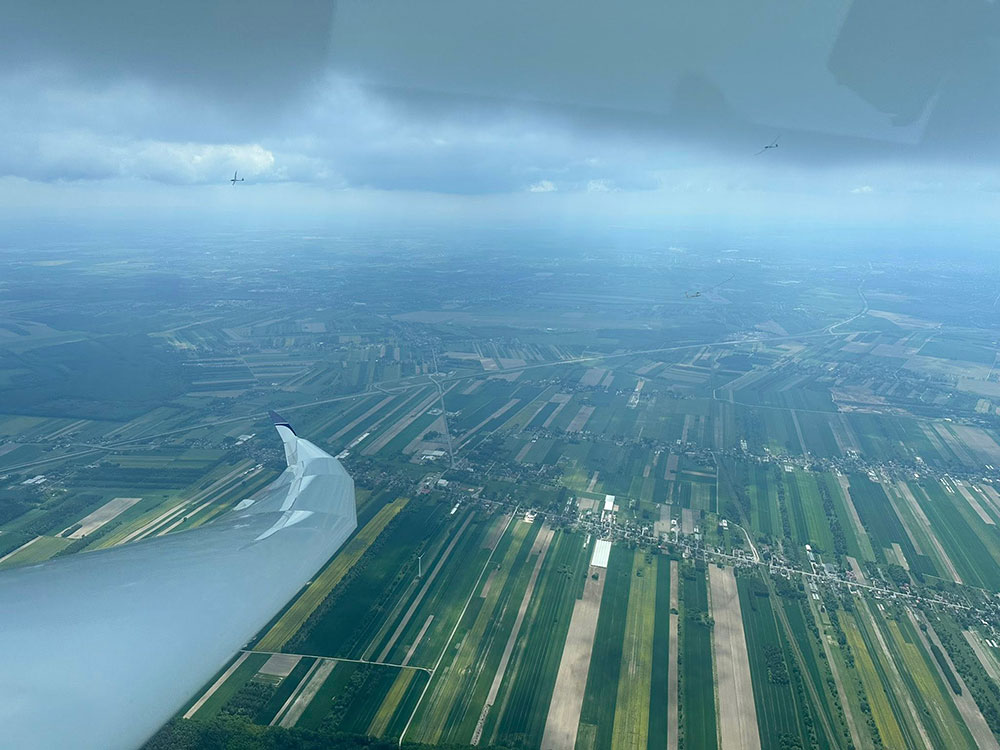
Polish farmland offered different outlanding conditions to those in Australia.
View from Afar
Armchair pilots across the world tuned in to see the WGC unfold while task information, live tracking and results were published online. Following is the view from the GA editor’s chair in Sydney.
Open Class
The Open Class championship came down to a seven-point margin at the top. Felipe Levin from Germany flying an EB 29R won his second world title on 8,945 points, just clear of Poland's Sebastian Kawa on 8,938. Germany's Michael Sommer came 3rd on 8,871. By any measure, it was one of the closest Open Class finishes in championships history.
Levin won the opening task at 120.79 kph over 382km, with Sommer just 96 seconds behind. Task 2 on 20 May was a faster, fixed-route 537km race, and Kawa – flying in front of his home crowd – covered the course at 134.28 kph for maximum points, vaulting him up the standings. The top five on that day were separated by under 14 minutes over 537km, which is a good measure of how closely matched the leading pilots are when conditions are clean and thermals are working.
Tasks 3 and 4 continued to show Levin and Sommer at or near the front. Task 5 was one of the longer, harder days of the contest – a demanding AAT that produced a wide spread of results.
The contest stayed close through the middle phase. Task 6 on 24 May France's Sylvain Gerbaud took the day win at 122.53 kph, while Levin had a quieter day in 10th, though his earlier points kept him at the top of the standings. Through Tasks 5 and 7 the pattern of the championship became clear. Levin and Sommer were consistent across all conditions, while Kawa had the pace to take day wins on the better days but could not quite close the gap in the overall standings.
Task 7 on 26 May was a shorter, more difficult day of marginal weather. Christian Hynek took an opportunistic win at 100.61 kph, while Levin finished fourth at 97.53 kph – neither gaining nor losing meaningful ground. Task 9 on the penultimate day was among the best of the championship, an 848km fixed route that Levin won at 143.20 kph, with Kawa 2nd and Sommer and Aboulin arriving within eight seconds of each other for 3rd and 4th. Going into the final task, Levin led Sommer by 76 points and Kawa by 146.
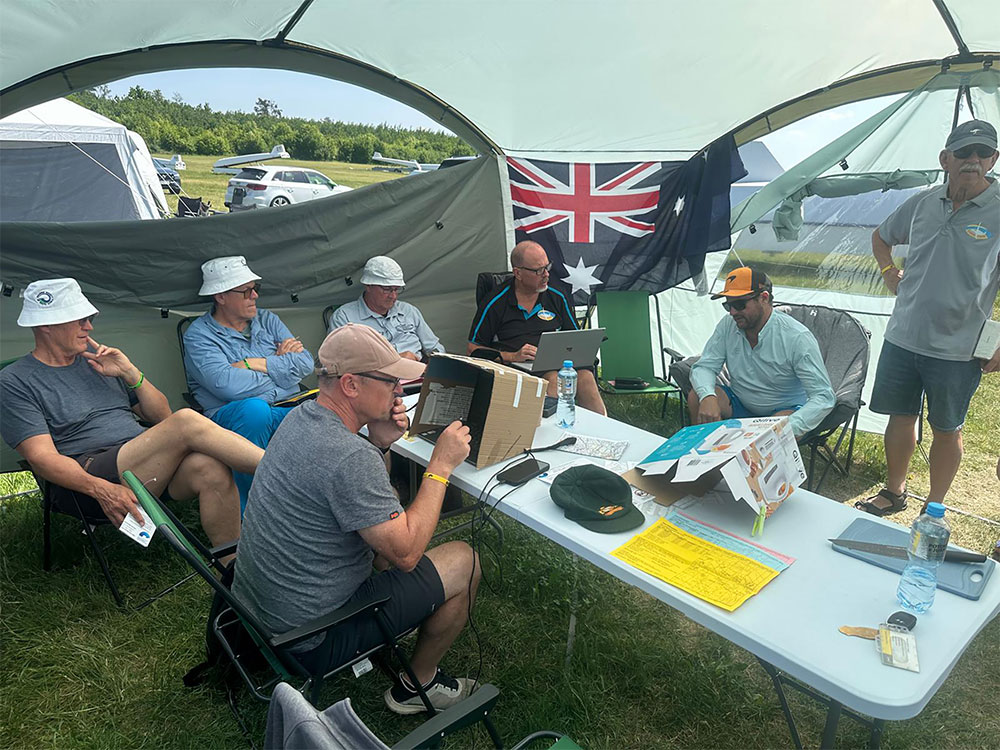
The Australian team talk tactics at Aussie basecamp.
Win for Jansen
David Jansen won Race 8, beating former world champions Sebastian Kawa and Russel Cheetham. He flew 420km at 118 kph showing what he could do in his new JS5.
The final task, a 3 hour AAT with a maximum of 610km, did not settle the Open Class title until the results were processed. Kawa flew 432 km at 135.19 kph for maximum points, with Sommer and Levin close together at 123 kph in 2nd and 3rd. But Levin's earlier consistency meant that Kawa's strong finish fell seven points short of overhauling him overall. Sylvain Gerbaud finished 4th in the championship on 8,453 points, with Laurent Aboulin 5th on 8,362. Britain's Russell Cheetham placed eighth overall on 7,510 points.
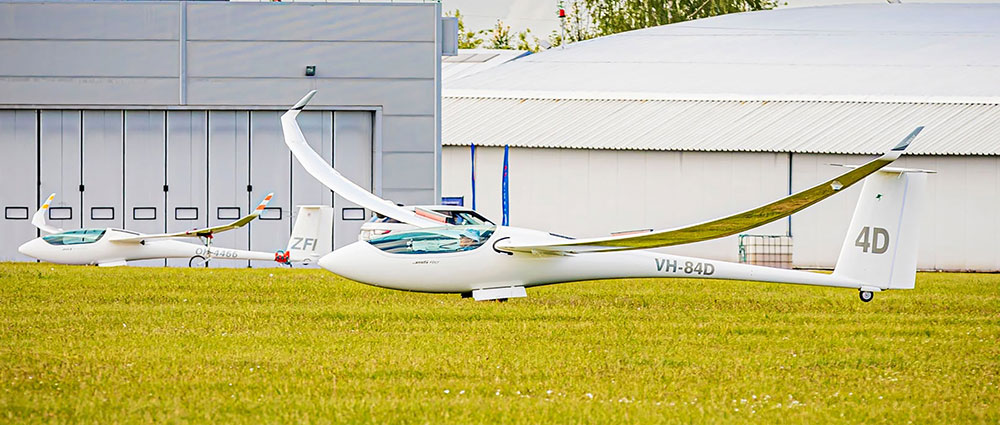
David Jansen landing his new JS5.
18 Metre Class
Victor Mallick from France flying a JS3 won the 18 Metre Class on 8,440 points, holding the championship lead through most of the competition and managing his margins consistently in the final stages. His compatriot Christophe Abadie, the 2022 World Champion, finished second on 8,165. Stefan Langer (Germany, AS 33 Me) was 3rd on 8,051, a result built on consistent day-to-day scoring rather than big individual wins.
At 42 entrants, the 18 Metre Class was the largest of the three classes and generally produced the tightest daily results.
Task 6 was notable in the 18 Metre Class for bringing the standings to an exact dead heat. Mallick and Langer were level on 4,978 points apiece at the halfway mark. By Task 7 the US pilot Sean Fidler took the daily win at 105.49 kph on what was a more difficult day, with the overall top four – Mallick, Langer, Abadie and Kiessling – separated by under 120 points. Task 9 was won by Poland's Karol Staryszaky at an astonishing 142.68 kph over 75km, while Mallick held third on the day at 137.92 kph, enough to protect his overall lead.
On the final day, Abadie won the task at 121.28 kph with Mallick just behind at 120.28 kph, the two pilots arriving 455 and 453km into the task window within seconds of each other. Mallick's 985 points on the day held off any late challenge, with the field covering a wide range of speeds – 36 gliders finished the task, the last at 82.50 kph after 4 hours 49 minutes. Mario Kiessling finished 4th in the championship on 7,789 points, and Thies Bruins 5th on 7,614.
20 Metre Multi-Seat Class
Germany's Karsten Leucker and Jan Omsels flying an Arcus T won the Two-Seater title on 8,338 points, finishing 8th on the final day but with enough banked from the preceding nine tasks to hold off the Polish crew of Łukasz Grabowski and Judyta Czyz, who finished 2nd on 8,300. The Hungarian pairing of Kassai and Mészáros were 3rd on 8,204, with Australia's Woolley and Gateley 4th on 8,144 and Britain's Steve Jones and Gary Coppin 5th on 7,953.
Leucker and Omsels won Task 1 by just 12 seconds over Jones and Coppin, who actually covered slightly more distance. Task 2 reversed that order, with Jones and Coppin winning on a harder day at 99.26 kph over five hours and eight minutes – only seven of the 16 crews made it around the 510km course that day. The German pair finished 5th on that task at 93.74 kph, which kept them in contention but not ahead.
Australian Day Win
Adam Woolley and Keith Gateley won Race 4 flying 32.72km at 111.69 kph. They took 2nd place in Race 8 and were always near the top of the table and in contention. At the end of the championships they were clipped at the post and missed a podium position by just 16 points for a well deserved 4th place overall.
By Task 6, Leucker and Omsels had reasserted their position at the top of the standings on 4,914 points, with Adam and Keith in 3rd on 4,744 at that point. Task 7, the marginal-weather day, saw Belgium's Delfosse and De Broqueville take the win at 96.9 kph, with Leucker and Omsels on 3rd. Their lead of 5,652 points after seven tasks over Grabowski and Czyz on 5,474 was enough of a cushion and made consistent scoring in the final three tasks sufficient to hold it.
Task 9 produced the fastest racing the class saw throughout the championship, with Janowitsch and Lutz winning at 132.43 kph over 616 km. Going into the final day Leucker and Omsels led by 111 points, enough to make finishing 8th on Task 10 at 100.99 kph sufficient to seal the title, despite the Finnish pair of Kettunen and Sorri taking the day win at 110.19 kph.
Championships Summary
The 40th FAI World Gliding Championships produced three well-contested titles across ten scoring tasks. The Open Class margin of 7 points between Levin and Kawa after ten days, and nearly 5,000 scored kilometres, will stand as one of the narrower championship finishes in that class. The 18 Metre Class was similarly close through the middle stages before Mallick pulled clear in the final phase.
The Two-Seater title went to the crew that managed the best combination of consistency and reliable scoring, with the German pairing rarely giving ground and never having a genuinely bad day. The Australian team performed very well, especially considering the logistical difficulties of arranging gliders halfway around the world.
Sean Young
WORLD GLIDING CHAMPIONSHIPS
18M OPEN, 20M MULTI-SEAT
CzEstochowa-Rudniki Poland
16 - 30 MAY 2026
Open Class
1 Felipe Levin Germany EB 29R 8,945
2 Sebastian Kawa Poland JS5 8,938
3 Michael Sommer Germany EB 29R 8,871
14 David Jansen Australia JS5 4,824
18m Class
1 Victor Mallick France JS3 18m 8,440
2 Christophe Abadie France JS3 TJ 18m 8,165
3 Stefan Langer Germany AS 33 Me 18m 8,051
20 Mark Lumpy Paterson Australia JS3 TJ 18m 7,133
23 Norm Bloch Australia JS3 TJ 18m 6,928
20m Multi-Seat Class
1 Leucker & Omsels Germany Arcus T 8,338
2 Grabowski & Czyz Poland Arcus M 8,300
3 Kassai & Mészáros Hungary Arcus T 8,204
4 Woolley & Gateley Australia Arcus M 8,144
Full results at soaringspot.com tinyurl.com/wgcpol