Threat and Error Management
By Pat Barfield
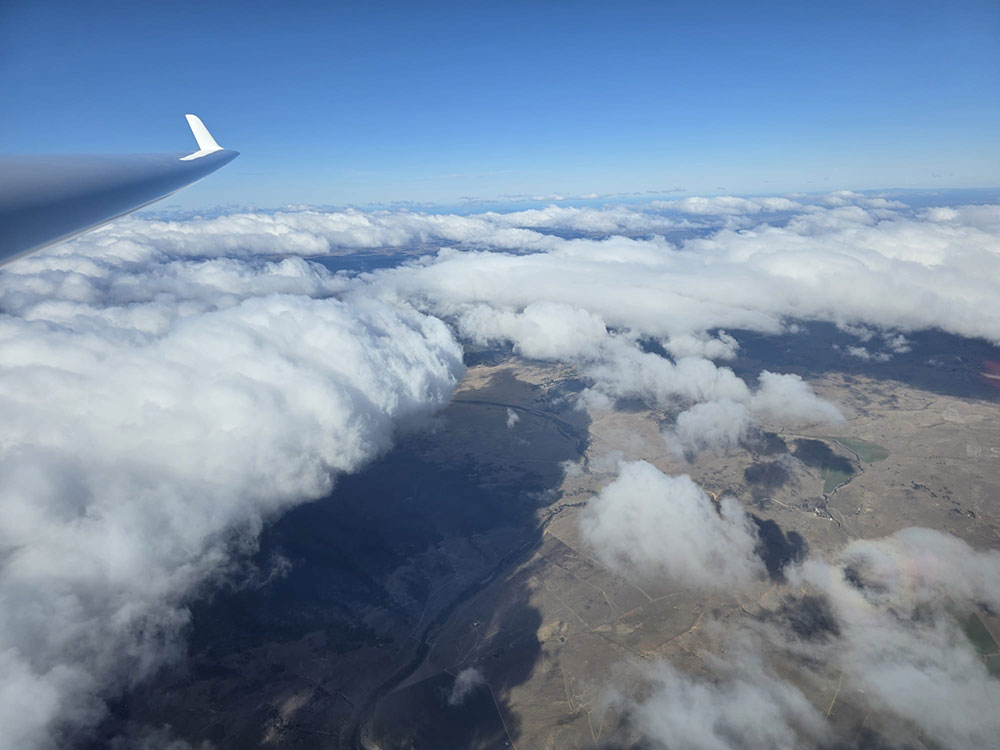
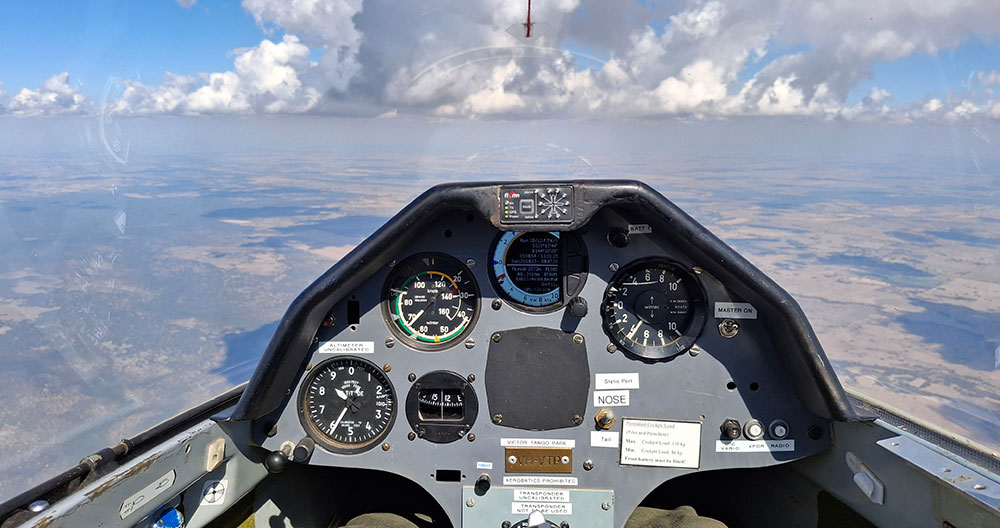
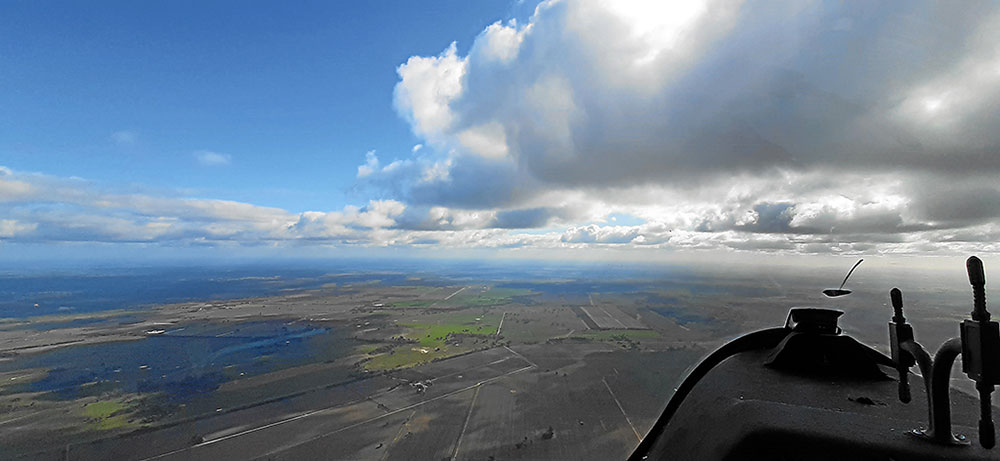
Picture this: You are in a powered sailplane, and you have pushed far from home ahead of an approaching front. Shadows intrude over your homeward route. You get lower, and you feel okay about your engine behind your seat. “Let’s keep going.” Hope turns to apprehension as the sky turns soft then flat. You push on over the forested areas, and yes, you can just reach open ground. “Oh well, time to start the engine and cruise home under power,” you say. You raise the mast, attempt an engine start, then airstart procedure, but no joy, it won’t fire up. Meanwhile you are sinking faster, as you rapidly descend towards a tight little paddock…
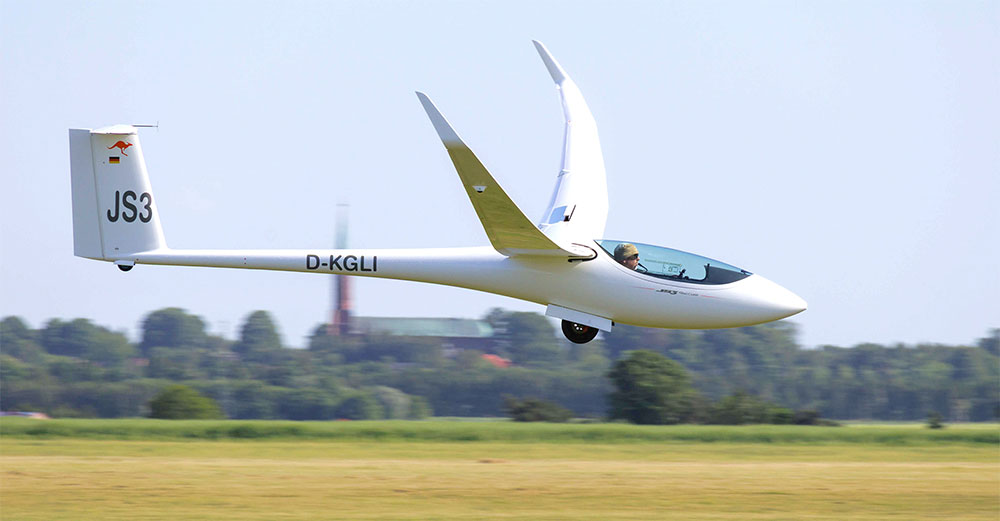
Powered sailplanes are becoming more common in Australia because they are a great way to fly independently without needing an aerotow and they open up many new places to fly around this vast country. With their increasing use, it’s important to understand the risks and hazards associated with the unique aspects of powered sailplanes.
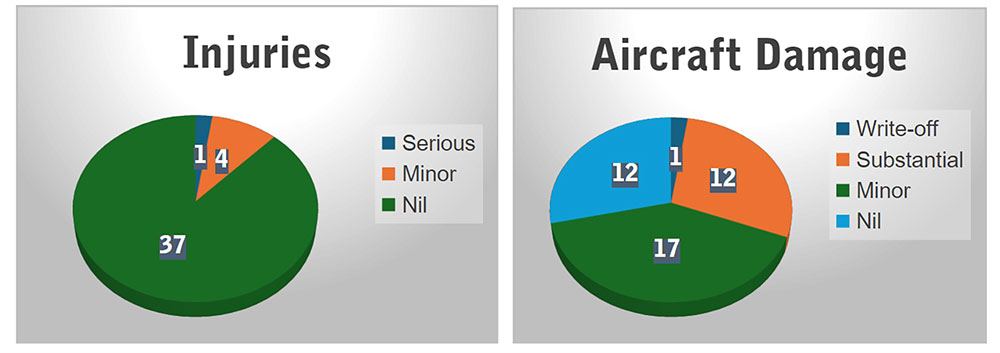
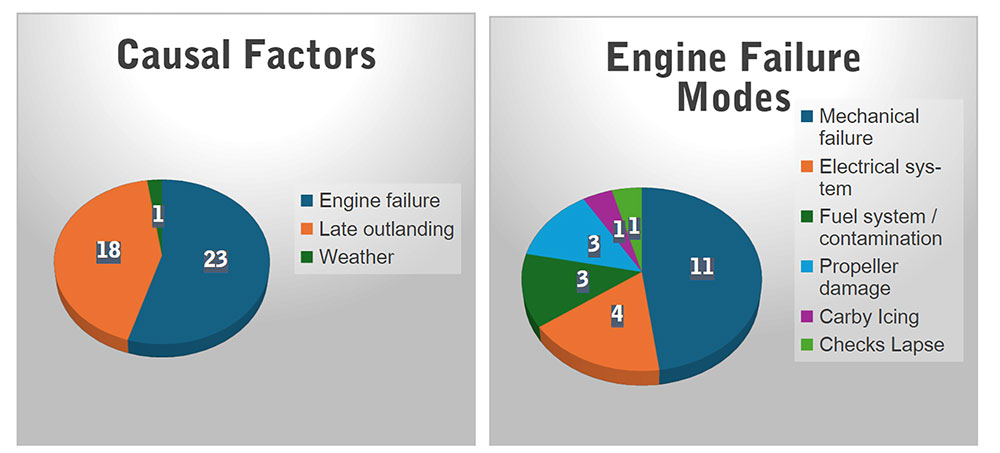
This article will concentrate on the topic of restarting the engines in flight, which doesn’t always go to plan. There were 42 reported SOAR incidents between 2011 and 2025 relating to inflight restarting of powered sailplane engines, and many of us will have heard anecdotally of more unreported incidents. The statistics in this article relate to the reported incidents to share the benefit of these lessons without having to learn them first-hand.
Threats
The greatest threat is the engine failing to start when needed due to a variety of reported factors including mechanical failures, electrical system, fuel system or contamination, propeller damage and carby icing. Another reported cause of an engine failing to start resulted from the pilot not following the checklist actions, exacerbated by the stress of low-height decision. The impact of a late outlanding decision will be discussed in more detail in the human factors section.
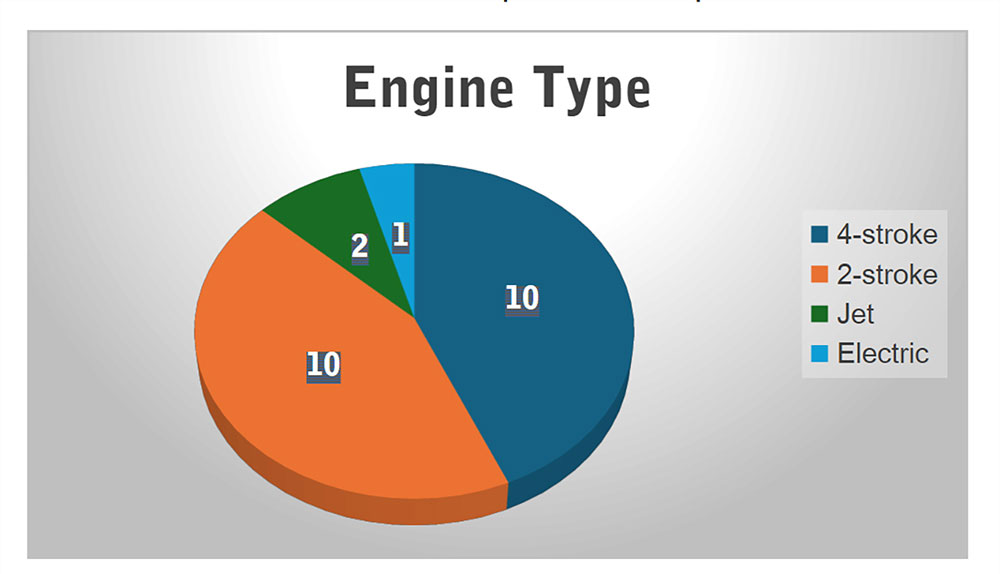
After a successful restart, the threat of adverse weather conditions such as downdrafts from orographic or convective conditions may impact climb performance, which resulted in one impromptu outlanding. You may think that modern jet and electric powered sailplanes are totally reliable, yet jet and electric engine failures were reported. You would expect greater engine reliability with a 4-stroke engine compared to a 2-stroke, however the data showed a similar rate of failure between 2-stroke and 4-stroke powered sailplanes.
Human Factors - Normalisation of Deviation
The term ‘normalisation of deviation’ was first used after the Space Shuttle Challenger explosion. Even though there was a known threat with the rocket booster O-rings in cold temperatures, NASA became desensitised to the risk by gradually reducing the safety margins until eventually a catastrophic event occurred. Many pilots who have successfully climbed away from a low-level airborne restart may lead to a creeping culture of personal normalisation of deviance, to delay the outlanding decision incrementally later until an incident or accident occurs.
Late outlanding decision
As height reduces and an outlanding becomes more imminent, more attention is required on paddock selection and landing tasks and, consequently, attention to restarting and other checks reduces. For many pylon mounted engines, because the stall speed increases when the engine is deployed, greater flying accuracy is required if the engine fails to start. Pilots who made late outlanding decisions were significantly more susceptible to a lapse of checks, mostly landing with the wheel up or failing to start. A lapse of checks was evident in 6 out of 18 late outlanding decisions (rate of 33%) as opposed to 3 out of 23 timely outlanding decisions (rate of 13%).
Most pilots think of their available resources in terms of two factors, altitude and airspeed, yet there are two more to consider: time and ideas. The lower you are, and the faster you are sinking, the less time you have to perform any restart attempts and to manage all the other tasks needed to execute a safe landing. Time compression and hurried activity markedly increase the probability of lapses in checks and errors in execution. Furthermore, if you run out of ideas, more errors are probable such as goal fixation on a worsening option.
Threat and Error Management
Some threats can’t be totally mitigated because engine unreliability is inherent in powered sailplane engines due to design standards, single ignition systems, unreliable fuel quantity indications and engine systems overheating.
Options to manage the remaining threats include:
- Regular powerplant maintenance and running.
- Change fuel regularly, particularly in a sustainer engine that may have limited engine use.
- With a non-powered glider, typical risk appetite dictates that pilots should always fly within gliding distance of landable terrain. Given the reliability of inflight engine starting, this maxim should be followed for powered sailplanes as well.
- Don’t extend the engine unless within gliding range of landable terrain with the engine deployed.
- Assume the engine won’t start.
- Start the engine no later than on downwind for your selected paddock with the aircraft configured for landing (with the undercarriage down) in case the engine fails to start. Ensure that your downwind leg is sufficiently comfortable to reach your landing area if the engine is deployed but not running.
- Know how long it takes to start the engine via the primary and alternative start methods. Know the warm-up time to achieve climb power. Restart earlier after extended flight at high altitude and low air temperature.
- Be familiar with climb performance in areas of strong downdrafts.
- Beware of time compression, leaving limited time to perform essential actions.
Restarting engines in flight
The GAus Powered Sailplane Manual recommends initiating a restart above 2,000ft AGL. The following extracts from powered sailplane flight manuals contain some useful guidance that can also be considered for other powered sailplane types. Note that the minimum heights quoted by the aircraft manufacturers are for current factory pilots in the best-case scenarios and you should add your own margins depending on your personal flying performance and risk appetite.
DG 1001M Flight Manual
Restarting the engine should only be done over landable terrain and not below 400 m (1320 ft) above ground. But it is better to restart the engine at 200m (660ft) over a landable field rather than at 400m (1,320ft) over a forest or unlandable scrub.
Should a flight be conducted over a wide expanse of unlandable terrain, the engine should then be restarted at 1,000m (3,300ft) above ground level so that if the engine does not start, all the emergency starting procedures can be followed without hurrying, including retraction of the engine if necessary.
DG500m flight manual
With the engine extended but not running, the rate of sink at 90 km/h (49 kts) increases to 1.5m/sec. (300 ft/min.). This is a glide angle of 17!
Therefore, restarting the engine should only be done over landable terrain and not below 500m (1,650ft) above ground. But it is better to restart the engine at 200m (660ft) over a landable field rather than at 500m (1650ft) over a forest or unlandable scrub. Should a flight be conducted over a wide expanse of unlandable terrain, the engine should then be restarted at 1,000m (3,300ft) above ground level so that if the engine does not start, all the emergency starting procedures can be followed in peace including retraction of the engine if necessary.
ASK21mi flight manual
One should always be prepared for the possibility that the power-plant will fail to deliver the hoped-for propulsion. This may not necessarily be due to a technical shortcoming, but might be caused by nervous tension of the pilot, leading to mistakes in carrying out starting procedures. The engine and its reliability should be assessed in light of a sailplane pilot's experience, that a thermal is not necessarily found when it is most urgently needed.
The engines of powered sailplanes are not subject to such stringent production and test regulations as normal aviation engines, and therefore cannot be expected to be quite so reliable.
A minimum safe height for extending the propeller and starting the engine must be met. The criterion is that it must be possible to retract the propeller again and carry out a normal sailplane outlanding if the engine cannot be started. A general valid value for this minimum safe height is about 300m (980ft); however, this also depends strongly on pilot ability and geographic factors.
Stemme flight manual
It is not wise to assume that the drive system will never fail. When flying in glider configuration, it is recommended to plan the flight as if there were no engine. In motorised flight, always be prepared for an engine failure, with a possibility of a safe landing within your gliding range. In both cases, if the engine either refuses to start or simply quits, you may still land as a normal glider.
Risks and Decisions
While there are steps we can take to reduce the risk of mechanical failure, however, there will always be a residual risk. Assuming the engine will not start is the safest way to manage this risk. Assuming an outlanding is imminent is also prudent.
The other significant risk that pilots can manage is the decision point when to switch from a soaring pilot to a powered pilot to a landing pilot. The later you leave these decisions, the higher the risk.
No one sets out to have an accident. Yet many pilots find themselves in worsening situations, at increasing risk of accident, due to plan continuation bias, cascades of deferred and small decisions, reducing margins, increasing time pressure with reducing energy and options.
If the engine starts and you can climb away, that’s a bonus!